

Nearly 90% of landlords encounter disputes over security deposits at some point, often due to misunderstandings or miscommunication.
A security deposit is a critical component of the rental process, serving as a financial safeguard for landlords against potential damages or unpaid rent. For tenants, it represents a significant upfront cost.
Effective management of deposit involves understanding state-specific regulations and maintaining clear communication with tenants throughout the rental period. Clients1st Property Group, based in Charlotte, North Carolina, has developed proven strategies for security deposit management that minimize disputes and ensure compliance with local laws.
Key Takeaways
- Understand state-specific regulations regarding security deposits.
- Maintain clear and comprehensive documentation.
- Communicate effectively with tenants throughout the rental period.
- Minimize disputes through transparent deposit handling practices.
- Ensure compliance with local laws and regulations.
Understanding Security Deposits
Understanding security deposits is essential for both landlords and tenants, as it outlines the financial responsibilities and protections involved in renting a property. A security deposit is an upfront payment made to a landlord or property management company before moving into a rental property. This deposit serves as a financial safeguard, covering potential damages caused by the renter and any missed rent payments.
What Is a Security Deposit?
A security deposit is a specific type of payment that is distinct from other upfront costs such as application fees or pet deposits. Its primary purpose is to protect landlords from financial losses due to property damage beyond normal wear and tear or unpaid rent. For tenants, it serves as an incentive to maintain the property in good condition throughout their tenancy.
- A security deposit functions as a financial safeguard for landlords.
- It incentivizes tenants to maintain the property in good condition.
- The deposit covers potential damages and unpaid rent.
Why Security Deposits Matter for Landlords and Tenants
Security deposits are crucial for both landlords and tenants as they provide a clear financial incentive for tenants to take care of the property. For landlords, it offers protection against potential losses. Understanding the role of security deposits helps establish clear expectations between landlords and tenants, reducing the likelihood of disputes when the tenant moves out.
For landlords, the security deposit provides crucial protection against property damage and lease violations. Tenants benefit by having a clear incentive to maintain the property, resulting in better living conditions and a higher likelihood of receiving their full deposit back upon move-out.
Legal Requirements for Security Deposits

Understanding the legal requirements surrounding security deposits is essential for landlords and property managers in Charlotte, North Carolina. Compliance with these regulations not only helps in avoiding legal complications but also fosters a positive landlord-tenant relationship.
Federal Laws Affecting Security Deposits
Federal laws play a significant role in governing security deposit practices. Key legislation includes the Truth in Lending Act (TILA), Fair Credit Reporting Act (FCRA), and Fair Housing Act (FHA). The Fair Housing Act, for instance, prohibits discrimination in deposit amounts or return policies based on protected characteristics such as race, religion, or family status. Landlords must ensure their security deposit practices comply with these federal regulations to avoid potential legal issues.
State-Specific Security Deposit Laws
State laws regarding security deposits vary significantly, encompassing aspects such as maximum deposit amounts, interest requirements, deposit return timelines, and record-keeping obligations. In North Carolina, for example, landlords are required to return security deposits within 30 days of lease termination, along with an itemized statement of any deductions for damages beyond normal wear and tear. It’s crucial for landlords to understand the specific state laws governing security deposits in their jurisdiction.
- Maximum security deposit limits
- Required interest payments on deposits
- Mandatory timelines for returning deposits
- Record-keeping requirements for deposit transactions
Local Regulations in Charlotte, North Carolina
In addition to state laws, landlords in Charlotte must also comply with local regulations. These may include specific ordinances related to the collection, storage, and return of security deposits. Staying informed about both state and local laws is vital for ensuring compliance and avoiding potential penalties.
By understanding and adhering to these legal requirements, landlords can protect their interests while also maintaining a fair and transparent relationship with their tenants.
Setting the Right Security Deposit Amount
Determining the appropriate security deposit amount is crucial for both landlords and tenants. It serves as a financial safeguard for landlords against potential damages or unpaid rent, while also being a significant upfront cost for tenants.
Standard Security Deposit Amounts
The standard security deposit amount typically ranges from one to two months’ rent. This range is considered a reasonable balance between protecting the landlord’s interests and not deterring potential tenants. For instance, in a competitive rental market, setting the security deposit at one month’s rent might be more attractive to applicants.
Factors That Influence Security Deposit Amounts
Several factors influence the appropriate security deposit amount, including the property’s value, rental market conditions, the tenant’s credit history, and whether pets are allowed. For example, a furnished property might warrant a higher security deposit due to the increased value of the contents.
Security Deposit Limits by State
State laws play a significant role in determining the maximum allowable security deposit. While some states cap the deposit at one month’s rent, others allow up to three months’ rent, depending on factors like the property’s furnishing status. For example, North Carolina allows landlords to charge up to one and a half months’ rent for month-to-month leases and two months’ rent for longer lease terms.
By understanding these factors and legal limits, landlords can set a security deposit amount that is both competitive and protective of their investment.
How to Handle Security Deposits Properly
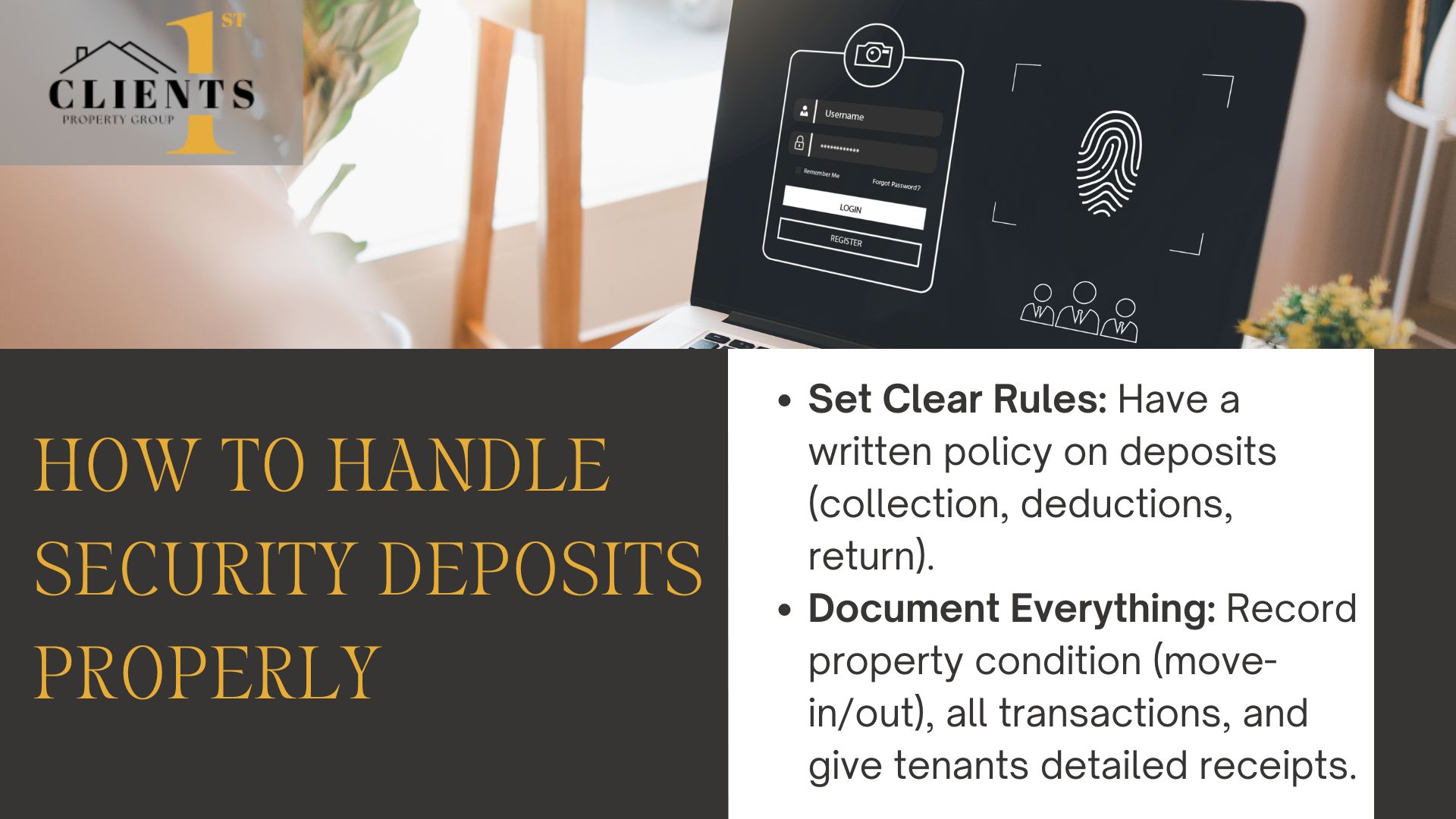
Effective security deposit management is key to avoiding disputes and ensuring a smooth rental experience. Landlords must be diligent in their handling of security deposits to protect both their interests and those of their tenants.
Creating Clear Security Deposit Policies
Creating a comprehensive written security deposit policy helps prevent misunderstandings and disputes with tenants. This policy should clearly outline collection procedures, permissible deductions, and return timelines. By having a transparent policy, landlords can ensure compliance with legal requirements and maintain a positive landlord-tenant relationship.
Documenting the Collection Process
Proper documentation begins at move-in with detailed property condition reports that both landlord and tenant sign, establishing a baseline for comparing the unit’s condition at move-out. Maintaining organized records of all security deposit transactions, including collection, any interest accrued, and eventual return or deduction documentation, protects landlords in case of disputes.
Providing Proper Receipts and Documentation
Providing tenants with a detailed receipt that specifies the security deposit amount, date received, and where funds will be held demonstrates professionalism and compliance with legal requirements. Clients1st Property Group recommends using standardized forms and checklists for security deposit handling to ensure consistency and completeness in documentation across all rental properties.
By following these steps and maintaining thorough documentation, landlords can ensure they are handling security deposits properly, reducing the risk of disputes and fostering a positive rental experience for both parties.
Storing Security Deposits Correctly
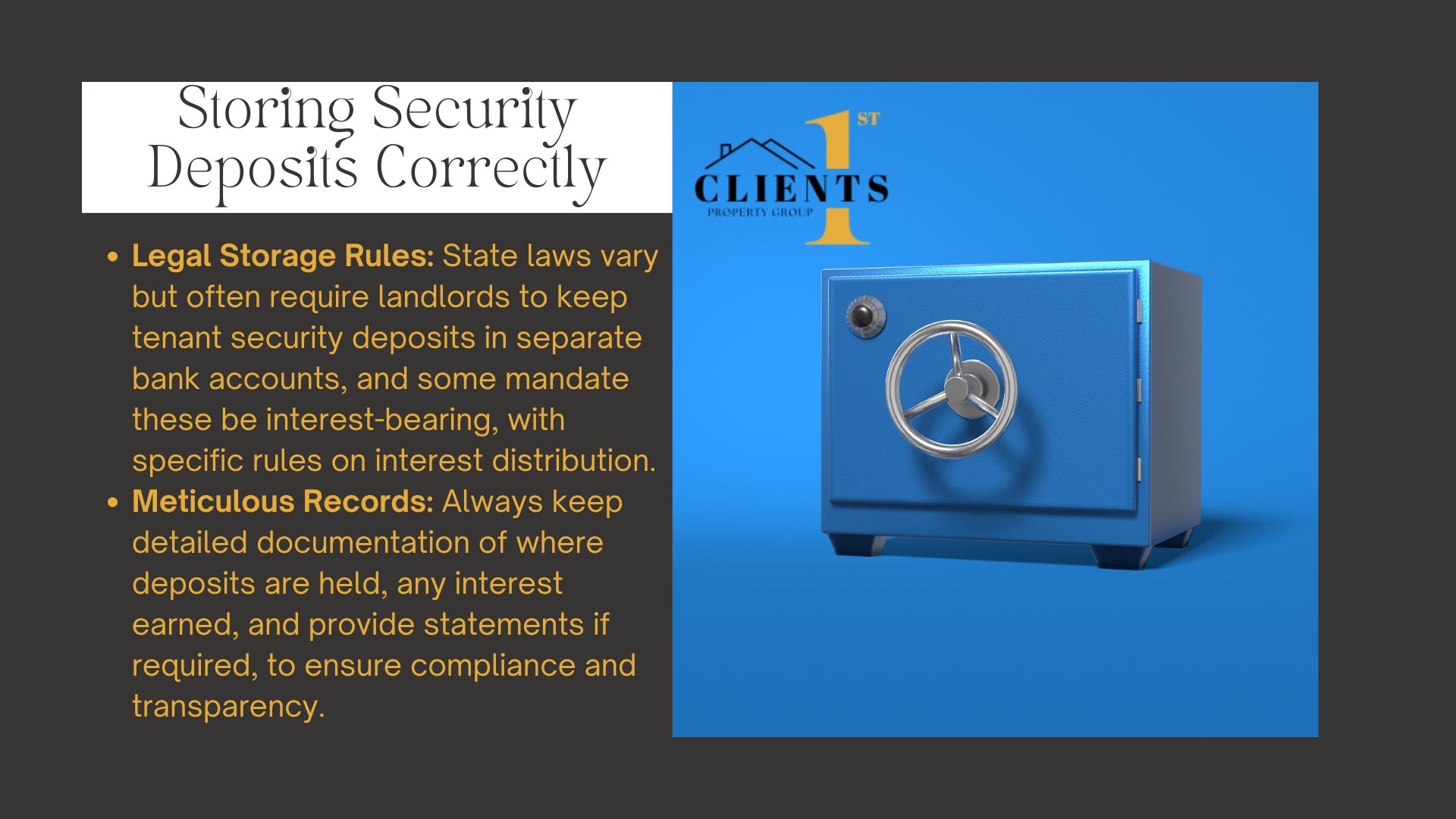
The correct handling of security deposits is a critical aspect of property management that landlords cannot afford to overlook. Proper storage is not just about compliance with the law; it’s also about maintaining a positive relationship with tenants.
Separate Bank Account Requirements
Many states require landlords to store security deposits in separate bank accounts to prevent commingling with personal or business funds. For instance, North Carolina law mandates that security deposits be held in a trust account with a licensed and insured bank or financial institution. This separation is crucial for avoiding legal complications in case of disputes.
Interest-Bearing Accounts: When Required
In some jurisdictions, landlords are legally obligated to place security deposits in interest-bearing accounts. The accrued interest may belong to the tenant or be split between the tenant and landlord, depending on state regulations. This requirement adds another layer of complexity to security deposit management.
Record-Keeping Best Practices
Proper record-keeping is essential for compliance and transparency. Landlords should maintain detailed documentation of where deposits are held, any interest earned, and regular account statements that can be provided to tenants upon request. Digital property management systems can significantly simplify this process by tracking security deposit accounts, calculating interest when required, and generating necessary documentation.
| State | Separate Account Requirement | Interest-Bearing Account |
|---|---|---|
| North Carolina | Yes | Yes, under certain conditions |
| California | Yes | Yes, for deposits over a certain amount |
| New York | Yes | Yes, with interest belonging to the tenant |
By following these guidelines, landlords can ensure they are storing security deposits correctly, maintaining compliance with state laws, and fostering a transparent and trustworthy relationship with their tenants.
Conducting Property Inspections
To avoid potential disputes over security deposits, landlords must prioritize detailed property inspections at the start and end of tenancies. This proactive approach helps in documenting the property’s condition, thereby reducing the likelihood of disagreements when the tenant moves out.
Move-In Inspections: Documenting Property Condition
Move-in inspections are critical for establishing a baseline of the property’s condition. Landlords should conduct thorough inspections, documenting every aspect of the property with date-stamped photographs, videos, and detailed written descriptions. It’s essential that tenants are involved in this process and sign off on the documentation to ensure mutual agreement on the property’s state.
This detailed record helps prevent potential disputes when the tenant moves out, as it provides clear evidence of the property’s condition at the start of the tenancy.
Move-Out Inspections: Assessing Damages
Similarly, move-out inspections are vital for assessing any damages that may have occurred during the tenancy. These inspections should mirror the move-in inspections in terms of thoroughness and documentation, allowing for a direct comparison to identify any damages beyond normal wear and tear.
By involving tenants in the move-out inspection process, landlords can increase transparency and reduce the likelihood of disputes over security deposit deductions.
Using Technology for Better Documentation
Modern technology, such as property inspection apps, can significantly enhance the documentation process. These tools enable landlords to create comprehensive digital records, complete with photos, notes, and tenant signatures, which can be securely stored and easily retrieved if disputes arise.
By leveraging technology and following a systematic inspection process, landlords can protect their interests while also being fair to their tenants, ultimately facilitating a smoother security deposit return process.
Legitimate Deductions from Security Deposits
The key to managing security deposits effectively lies in knowing what constitutes a valid deduction. Landlords must understand the legitimate reasons for deducting from a security deposit to avoid disputes and potential legal issues.
Understanding Normal Wear and Tear vs. Damage
Distinguishing between normal wear and tear and actual damage is crucial. Normal wear and tear includes minor issues like faded paint or worn-out carpets from regular use, which cannot be deducted from the security deposit. On the other hand, deductible damages include significant issues such as large holes in walls, broken fixtures, or stains on flooring. As one property management expert notes, “The line between wear and tear and damage is often blurred, but it’s essential to document everything to justify any deductions.”
Unpaid Rent and Utility Bills
Unpaid rent and utility bills are legitimate deductions from the security deposit, provided landlords maintain accurate records. Landlords should document outstanding amounts with invoices or statements to support their claims. For instance, if a tenant leaves with unpaid rent or utility bills, the landlord can deduct these costs from the security deposit, ensuring that they are not left with financial losses.
Cleaning and Repair Costs
Cleaning costs can be deducted when a tenant leaves a property in an excessively dirty condition. However, routine cleaning between tenancies is generally considered the landlord’s responsibility and is not deductible. When making deductions for cleaning or repair costs, landlords must provide detailed documentation, including itemized lists of damages and repair costs with receipts. This transparency helps in avoiding disputes with tenants.
By understanding these legitimate deductions, landlords can manage security deposits more effectively, ensuring compliance with legal requirements and maintaining a positive relationship with tenants.
Returning Security Deposits
After a tenant moves out, landlords face the task of returning security deposits in accordance with state regulations. This process involves several critical steps, including adhering to specific timelines, creating detailed deduction statements, and using appropriate methods for returning the deposits.
Timeline Requirements for Deposit Returns
State laws dictate the timeframe within which landlords must return a tenant’s security deposit after move-out. The deadline can range from 14 to 60 days, with North Carolina requiring returns within 30 days. Failing to meet these deadlines can result in severe penalties, including being liable for multiple times the original deposit amount plus the tenant’s legal fees.
| State | Timeline for Returning Security Deposits |
|---|---|
| North Carolina | 30 days |
| California | 21 days |
| New York | 14 days |
Creating Itemized Deduction Statements
When making deductions from a security deposit, landlords must provide tenants with an itemized statement detailing each deduction, its cost, and the reason for the charge. This statement should be supported by documentation such as repair invoices or cleaning receipts. For instance, if a tenant has damaged a wall, the landlord should include the cost of repairing the wall, along with a receipt or invoice for the work done.
Example of an itemized deduction statement:
- Repairing damaged wall: $200
- Cleaning services: $150
- Unpaid rent: $300
Methods for Returning Deposits
Security deposit returns should be sent to the tenant’s forwarding address via a trackable method such as certified mail, with delivery confirmation to prove that the landlord met the required timeline. Clients1st Property Group recommends processing security deposit returns promptly, often well before the legal deadline, to maintain positive relationships with tenants and build a reputation for fair business practices.
By following these guidelines, landlords can ensure compliance with state laws and maintain a positive relationship with their tenants.
Handling Security Deposit Disputes
When disagreements arise over security deposits, landlords and tenants must navigate a complex process to resolve disputes. Security deposit disputes can be stressful and costly for both parties, making it essential to understand the common causes and effective resolution strategies.
Common Causes of Disputes
Security deposit disputes often stem from disagreements over normal wear and tear versus damage, inadequate documentation of property condition, or failure to provide itemized deduction statements. Clear communication and thorough documentation are key to preventing these issues. Proactive communication throughout the tenancy, especially during move-out inspections, can prevent many security deposit disputes by setting clear expectations and addressing concerns immediately.
Mediation and Resolution Strategies
Mediation services offer a cost-effective alternative to court proceedings, allowing landlords and tenants to resolve security deposit disagreements with the help of a neutral third party. This approach can be particularly beneficial in maintaining a positive landlord-tenant relationship. By using mediation, both parties can work together to find a mutually acceptable solution.
When Small Claims Court Becomes Necessary
If a dispute remains unresolved between the landlord and tenant, it may be necessary to escalate the matter to small claims court for resolution. Landlords must be prepared with comprehensive documentation, including the lease agreement, move-in and move-out inspection reports, photographs, repair receipts, and records of all communications with the tenant. This thorough preparation is crucial for presenting a strong case in small claims court.
Using Property Management Software for Deposits
Property management software has revolutionized the way landlords handle security deposits, making it easier to stay compliant with regulations. Leveraging software like Landlord Studio streamlines the process of collecting and documenting security deposits, ensuring that landlords maintain a clear record of transactions.
Benefits of Digital Deposit Management
Digital deposit management systems offer several benefits, including specialized tools for tracking security deposits from collection through return. This helps landlords maintain compliance with state-specific regulations. Additionally, these systems provide secure storage for critical documentation, such as property inspection reports and repair invoices, creating an organized audit trail in case of disputes.
- Automated reminders for security deposit-related deadlines help landlords avoid costly penalties.
- Integration with accounting software allows for accurate tracking of security deposit funds, especially when they must be held in separate accounts or accrue interest according to state laws.
Features to Look for in Deposit Management Tools
When selecting property management software for security deposits, landlords should prioritize features like customizable inspection templates, secure document storage, and automated notification systems. Compliance tools specific to their state’s requirements are also crucial. By choosing software with these features, landlords can ensure they are managing security deposits efficiently and in compliance with relevant laws.
Clients1st Property Group’s Approach to Security Deposits
Managing security deposits efficiently is key to successful property management, and Clients1st Property Group has perfected this process. Our comprehensive security deposit management system ensures full compliance with North Carolina state regulations while protecting the interests of both landlords and tenants.
Our Security Deposit Management Process
At Clients1st Property Group, we conduct detailed digital move-in and move-out inspections with tenants present, creating thorough documentation that significantly reduces the potential for disputes over security deposit deductions. Our property management team maintains dedicated trust accounts for all security deposits, ensuring funds are properly segregated and accounted for according to North Carolina requirements.
- Detailed digital inspections with tenants present
- Dedicated trust accounts for security deposits
- Regular statements available to property owners and tenants
How We Protect Both Landlord and Tenant Interests
Our transparent approach includes clear communication about potential deductions during the move-out inspection, giving tenants the opportunity to address issues before final calculations are made. Property owners working with Clients1st Property Group benefit from our expertise in security deposit management, reducing their liability exposure while maintaining positive relationships with quality tenants.
| Benefits for Landlords | Benefits for Tenants |
|---|---|
| Reduced liability exposure | Clear communication about potential deductions |
| Expertise in security deposit management | Opportunity to address issues before final calculations |
| Maintenance of positive relationships with quality tenants | Regular statements available for security deposits |
For more information on our security deposit management services, please contact Clients1st Property Group at (704) 622-4865.
Conclusion
Security deposit management is a vital component of rental property management that requires careful consideration of legal requirements and transparent communication with tenants throughout the rental relationship.
By implementing the strategies outlined in this guide, landlords can minimize disputes, protect their investments, and build a reputation for fair and professional property management. Proper handling of security deposits not only helps landlords avoid legal complications but also contributes to positive tenant relationships, potentially leading to longer tenancies and reduced vacancy rates.
Effective security deposit management involves several key elements, including:
- Understanding and complying with legal requirements regarding security deposits, which vary by state and locality.
- Maintaining clear and comprehensive documentation of the deposit collection and return process.
- Fostering transparent communication with tenants about security deposit policies and any deductions made.
For property owners who prefer to delegate these responsibilities, working with an experienced property management company like Clients1st Property Group provides peace of mind and professional expertise. Their comprehensive property management services in Charlotte, North Carolina, include expert handling of security deposits, ensuring compliance with local regulations and fair treatment of tenants.
To learn more about how Clients1st Property Group can assist with security deposit management and other property management needs, contact them at (704) 622-4865. By entrusting your property management to professionals, you can enjoy a hassle-free rental experience while maintaining a positive relationship with your tenants.