

A home inspection is a critical step in buying or selling property. It helps identify potential issues with a house’s structure, systems, and safety features. For Charlotte residents, understanding this process ensures smoother transactions and informed decisions.
Proper preparation minimizes surprises during the evaluation. Sellers who address minor repairs and improve accessibility often see faster results. Buyers gain confidence knowing the property meets their expectations. Whether you’re new to real estate or experienced, these steps simplify the journey.
This guide outlines practical strategies to optimize your space for inspection day. From decluttering interiors to checking HVAC systems, every detail matters. Local experts like Clients 1st Property Group (704-622-4865) offer tailored advice for Charlotte’s unique housing market.
Key Takeaways
- Pre-inspection tasks reduce stress and streamline the evaluation process.
- Focus on maintenance and accessibility for critical areas like electrical panels.
- Professional guidance ensures compliance with regional standards in Charlotte.
- Both interior and exterior preparations impact the inspector’s assessment.
- Clear documentation helps address flagged issues efficiently.
Following these recommendations positions your property for success. A well-prepared home not only impresses buyers but also demonstrates care and transparency. Let’s explore how to create the best first impression for your home inspector.
Understanding the Home Inspection Process
Knowing what happens during a home inspection demystifies the real estate journey. This evaluation offers buyers and sellers actionable insights into a property’s condition. Clients 1st Property Group emphasizes that preparation starts with understanding the inspector’s role versus an appraiser’s.
Role of a Home Inspector
A licensed home inspector examines structural systems, electrical wiring, plumbing, and safety features. Unlike appraisers—who focus on market value—inspectors identify defects affecting livability. They spend 2-4 hours evaluating everything from roofs to crawl spaces.
Overview of the Inspection Report
The final report details findings using photos and descriptions. Minor issues like loose outlets may need quick fixes, while foundation cracks could delay sales. Buyers use this checklist to negotiate repairs, while sellers gain time to address concerns before listing.
Understanding these things builds trust between parties. As one expert notes, “A clear report turns unknowns into solvable tasks.” Whether you’re buying or selling, this process ensures transparency in Charlotte’s competitive market.
Benefits of a Pre-Listing Inspection
Sellers gain a strategic edge by uncovering hidden issues early. A pre-listing evaluation transforms unknowns into actionable steps, creating confidence in the property’s market readiness. Studies show homes with pre-inspections sell 12% faster on average, according to recent real estate data.
Transparency Builds Trust
Addressing minor repairs before listing prevents delays later. For example, fixing leaky faucets or updating smoke detectors avoids red flags during buyer evaluations. One Charlotte agent notes, “Proactive sellers often see fewer price negotiations and smoother closings.”
Pre-inspections also strengthen buyer confidence. When buyers see a clean report, they’re more likely to submit competitive offers. This approach reduces back-and-forth discussions, keeping the sale timeline on track.
Clients 1st Property Group specializes in thorough pre-listing assessments. Their team identifies everything from outdated wiring to HVAC inefficiencies, ensuring your property meets Charlotte’s standards. This preparation not only speeds up the sale but often increases final offers by 3-5%.
By resolving issues upfront, sellers avoid last-minute surprises that could derail deals. It’s a win-win: buyers appreciate honesty, and sellers control the narrative. Ready to streamline your transaction? Start with a professional evaluation.
Tips On How To Prepare For A Home Inspection
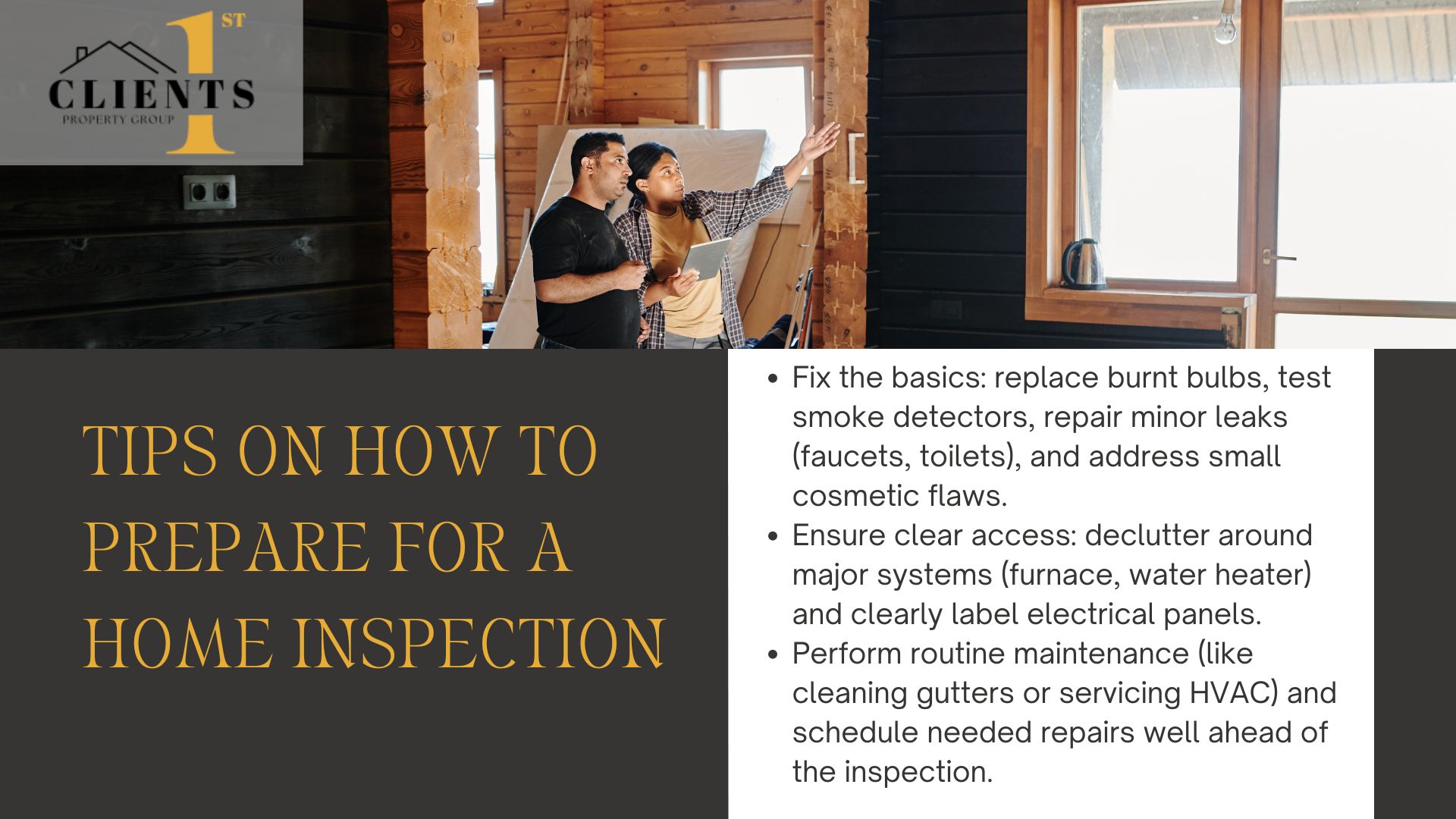
Effective preparation streamlines the evaluation process and highlights your property’s strengths. Simple tasks completed beforehand ensure inspectors can assess systems efficiently. Prioritize accessibility and functionality to avoid unnecessary delays.
- Replace burnt-out bulbs and test smoke detectors
- Fix dripping faucets and running toilets to prevent water damage flags
- Label electrical panels clearly for quick identification
- Clear storage areas near water heaters, furnaces, and crawl spaces
Walk through each room to spot peeling paint, cracked tiles, or loose handrails. Cosmetic flaws might seem minor but can influence perceptions of overall maintenance. One Charlotte homeowner shared, “Filling nail holes and touching up trim made our space look cared-for.”
Review standard checklists to verify nothing gets overlooked. Schedule repairs at least two weeks before the appointment to allow time for follow-ups. Regular upkeep—like cleaning gutters or servicing HVAC units—also supports smoother assessments.
Consistent care demonstrates pride of ownership and reduces last-minute scrambling. When critical areas function properly and spaces remain clutter-free, inspectors can focus on their evaluation rather than obstacles.
Home Maintenance and Repair Essentials
Proactive upkeep preserves property value and prevents costly surprises. Regular attention to structural systems and utilities ensures they operate safely and efficiently. This approach not only satisfies inspection requirements but also extends the lifespan of critical components.
Roof and Gutter Inspection
Start by examining the roof for cracked or missing shingles. Look for sagging areas or dark streaks indicating moisture buildup. Address minor issues promptly to avoid water damage to attics or interior walls.
- Clear debris from gutters to prevent blockages
- Confirm downspouts direct water 5-10 feet from the foundation
- Check flashing around chimneys and vents for corrosion
Plumbing and Electrical Check
Test all faucets, showers, and toilets for leaks or low water pressure. Inspect visible pipes under sinks for corrosion. For electrical systems:
- Replace frayed cords on appliances
- Ensure outlets near water sources have GFCI protection
- Update breaker panels if circuits frequently trip
HVAC maintenance matters too. Replace air filters every 90 days and schedule annual professional servicing. One Charlotte homeowner noted, “Documenting repairs gave buyers confidence in our home’s history.” Keep records of upgrades to showcase consistent care.
Cleaning, Decluttering, and Organizational Steps

A spotless home speaks volumes about its upkeep and care. Clutter-free spaces allow inspectors to assess structural elements without obstruction. This step isn’t just about aesthetics—it directly impacts how buyers perceive the property’s condition.
Interior Clean-Up Strategies
Focus on areas often missed during routine cleaning. Attics and basements should be free of debris, while closets and garages need organized shelving. Clear pathways under sinks and around windows for easy access to pipes and frames.
Wipe baseboards, vents, and light fixtures to remove dust buildup. Stained carpets or peeling wallpaper might raise concerns about moisture. One Charlotte seller noted, “Cleaning behind appliances revealed no hidden issues—it put everyone at ease.”
Organizing Key Inspection Areas
Label storage boxes and group similar items together. Donate unused belongings to minimize excess. Keep electrical panels and water heaters accessible by moving furniture or stacked items.
Remove debris from crawl spaces and furnace rooms. Inspectors appreciate labeled circuit breakers and unobstructed attic entries. A streamlined process ensures they can complete their inspection efficiently.
These efforts highlight pride of ownership. When spaces feel maintained, buyers visualize the home as move-in ready rather than a project waiting to happen.
Checking Critical Systems and Safety Features

A property’s long-term value hinges on its operational systems and safety measures. These components protect occupants and influence inspectors’ assessments. Prioritizing functionality and compliance reduces risks during evaluations.
HVAC and Appliance Functionality
Start by testing heating and cooling units. Replace air filters and listen for unusual noises during operation. Inspect visible ductwork for leaks or damage that could affect efficiency.
Check all appliances, including ovens, dishwashers, and garbage disposals. Ensure burners ignite properly and exhaust fans vent outside. Replace flickering light bulbs and confirm switches control the correct fixtures.
Safety Device Verification
Test smoke detectors and carbon monoxide alarms monthly. Replace batteries annually or as needed. Label each device’s installation date for clarity.
Exterior door locks should engage smoothly without sticking. Verify windows open fully and screens remain intact. A local inspector notes, “Secure entry points demonstrate attention to safety fundamentals.”
Document any irregularities in systems like electrical panels or water heaters. Addressing minor concerns early prevents them from escalating into report flags. For complex issues, consult licensed technicians before the inspection date.
Exterior Considerations for a Flawless Inspection
Curb appeal plays a pivotal role in shaping first impressions during property evaluations. A well-maintained exterior signals thorough upkeep and reduces concerns about hidden issues. Inspectors and buyers alike notice overgrown vegetation, cracked surfaces, or blocked pathways immediately.
Landscaping and Clear Access Routes
Trim trees and shrubs at least three feet from walls to prevent moisture damage and improve visibility. Remove fallen branches, leaves, or debris that could obscure foundation cracks or drainage systems. Ensure gates, sheds, and electrical panels remain accessible—leave keys or codes if locks exist.
- Rake mulch away from siding to deter pests
- Clear crawl space vents for airflow assessments
- Store outdoor furniture neatly to open walkways
Maintaining Driveways and Walkways
Repair uneven concrete slabs or loose pavers that pose tripping hazards. Pressure-wash stained surfaces to eliminate mildew or oil marks. Check exterior lighting fixtures and door handles for functionality—sticky locks or dim bulbs raise safety concerns.
One Charlotte realtor observes, “Buyers often judge maintenance standards by driveway conditions. A few hours of power washing can shift perceptions from ‘fixer-upper’ to ‘move-in ready.’”
Prioritize these tasks early to avoid last-minute rushes. Clear access routes not only aid inspectors but also help buyers envision the property’s potential. A polished exterior reinforces trust in the home’s overall condition.
Preparing for the Inspection Day
The final hours before an inspector arrives demand focused attention to detail. Proper planning ensures evaluators can work efficiently while minimizing disruptions. This phase transforms weeks of preparation into actionable results.
Final Preparation Checklist
| Task | Purpose | Status Check |
|---|---|---|
| Activate utilities | Enable testing of electrical/gas systems | ✅ Verified |
| Scan for new water leaks | Prevent moisture-related flags | 🔍 In Progress |
| Secure pets off-site | Reduce distractions | 🐾 Confirmed |
Day-Of Inspection Tips
- Place appliance manuals and garage door remotes on kitchen counters
- Complete a final walk-through 60 minutes before arrival
- Adjust thermostats to comfortable levels for system testing
Allow at least two hours for the process. Many professionals recommend vacating the house during evaluations. “An empty property lets us focus entirely on the assessment,” notes a Charlotte-based inspector.
Document last-minute fixes in a shared digital folder. Include photos of repaired items like sealed pipe joints or replaced outlet covers. This transparency builds credibility if questions arise later.
Working with Home Inspection Professionals
Selecting the right expert for your property evaluation ensures thorough assessments and reliable results. Experienced home inspectors combine technical knowledge with clear communication, turning complex findings into actionable insights. Their expertise often determines whether minor concerns escalate or get resolved efficiently.
Choosing a Qualified Home Inspector
Not all inspectors offer the same level of detail. Focus on these factors when comparing candidates:
| Factor | Why It Matters | Red Flags |
|---|---|---|
| Licensing & Certifications | Ensures compliance with state standards | No proof of credentials |
| Sample Reports | Shows attention to detail | Vague descriptions |
| Client Reviews | Reveals reliability | Consistent complaints |
Prioritize inspectors who explain findings in plain language. As one Charlotte buyer noted, “Our inspector walked us through the report, highlighting urgent fixes versus future upgrades.” Verify their access to tools like moisture meters or thermal cameras for hidden issue detection.
Guidance from Clients 1st Property Group
For over 15 years, Clients 1st Property Group (704-622-4865) has provided Charlotte residents with trusted evaluations. Their team:
- Follows a 200-point inspection checklist covering roofs to foundations
- Shares maintenance tips tailored to local climate challenges
- Offers post-assessment support for repair negotiations
Partnering with seasoned professionals streamlines the job while protecting your investment. They uncover issues others miss—like improper wiring in breaker boxes—saving you from costly surprises later.
Conclusion
A successful property transaction often hinges on the final inspection report. By focusing on interior organization, exterior maintenance, and system functionality, homeowners create confidence in their home’s condition. Addressing minor issues like leaky faucets or loose handrails demonstrates proactive care.
Even well-maintained properties may reveal routine wear during evaluations. Inspectors frequently note aging HVAC units or weathered roofing materials—common findings that rarely derail sales. Buyers appreciate transparency when sellers provide repair records or service receipts.
Thorough preparation reduces delays and strengthens negotiation positions. Clear access to electrical panels, attics, and crawl spaces allows inspectors to work efficiently. These efforts often translate into smoother transactions and fairer price agreements.
Use the strategies outlined here as your roadmap. For personalized guidance in Charlotte’s dynamic market, contact Clients 1st Property Group at 704-622-4865. Their expertise ensures your home inspection becomes a stepping stone—not a stumbling block—toward closing success.