

In commercial real estate, leasing agreements define financial responsibilities for tenants and property owners. One popular model shifts certain costs from landlords to businesses occupying the space. This structure, often abbreviated as NNN, provides predictable income for owners while giving tenants control over property-related expenses.
Clients1st Property Group, based in Charlotte, North Carolina, specializes in guiding investors through these arrangements. With deep expertise in retail and office spaces, their team simplifies complex terms like base rent adjustments and capital improvement allocations. Call (704) 622-4865 to discuss how tailored solutions fit your goals.
Under this model, businesses cover three major operating expenses: property taxes, insurance premiums, and maintenance costs. Landlords benefit from reduced management duties, while tenants gain transparency in budgeting. Though base payments appear lower upfront, long-term budgeting requires careful analysis of variable costs like roof repairs or utility system upgrades.
Key Takeaways
- Tenants handle taxes, insurance, and maintenance under NNN agreements
- Lower base rent offsets additional expense responsibilities
- Commercial properties often use this model for retail/storefront spaces
- Predictable income benefits property owners
- Location-specific costs impact tenant budgeting
- Expert guidance ensures balanced risk management
Successful implementation depends on clear contract terms and market awareness. Later sections will explore negotiation tactics for both parties and regional cost variations across U.S. markets. Clients1st Property Group’s Charlotte-based advisors help clients navigate these details with data-driven insights.
Introduction to Triple Net Leases
Commercial property agreements vary widely in how they allocate financial obligations. One model stands out for its balanced approach to shared responsibilities between businesses and property owners. Let’s explore how this structure works and why it’s favored in specific sectors.
Defining Triple Net Leases
In NNN agreements, businesses take charge of three core costs beyond base payments:
- Annual property taxes
- Building insurance premiums
- Routine maintenance and repairs
This differs from single net leases (where tenants pay just taxes) or double net leases (taxes + insurance). Full transparency in expense management allows both parties to budget effectively.
Context in Commercial Real Estate
Retail chains and franchises often prefer these arrangements. For example, a national pharmacy brand might use an NNN lease for storefronts to control location-specific costs. Landlords benefit from predictable income streams, while businesses gain flexibility in managing property upkeep.
Compared to gross leases—where owners handle all expenses—base payments in NNN deals are typically 20-30% lower. This trade-off incentivizes long-term partnerships, especially in markets with stable tax rates. Clear terms ensure neither party faces unexpected financial burdens, making expert guidance critical during negotiations.
Exploring what is triple net lease in Commercial Real Estate

Commercial property arrangements increasingly prioritize predictable cash flow and risk allocation. NNN agreements stand out for their ability to align tenant control with owner stability. Over 60% of single-tenant retail properties now use this model, according to 2023 industry reports.
Market Dynamics and Investor Appeal
Strong tenant credit ratings often drive NNN lease demand. National pharmacy chains like CVS and Walgreens exemplify this, leveraging long-term agreements to secure prime locations while offering landlords reliable income. These deals account for 42% of retail leasing activity in top U.S. markets.
Three factors enhance market relevance:
- Tenant-operated expense management reduces owner workload
- Inflation-adjusted rent escalations protect against economic shifts
- Property-specific cost transparency aids financial forecasting
Clients1st Property Group analyzes local tax trends and tenant financial health to match investors with optimal opportunities. Their Charlotte-based team recently structured a 15-year NNN agreement for a medical plaza, securing 4% annual rent increases tied to CPI metrics.
Upcoming sections detail how operating expenses and regional regulations influence these arrangements. Understanding these elements helps both parties create sustainable partnerships in evolving markets.
Key Components and Costs in a Triple Net Lease
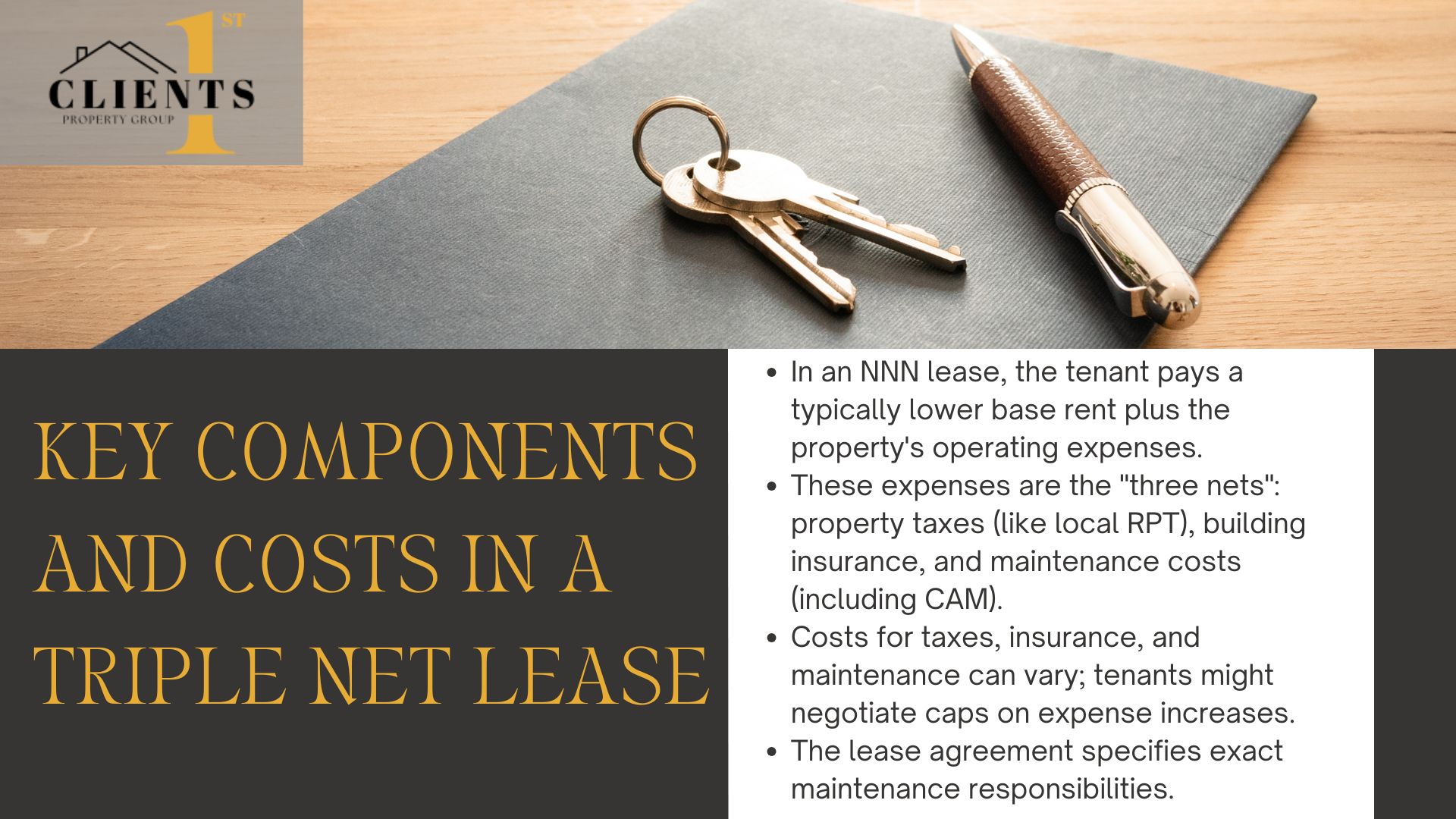
Navigating commercial property agreements requires clarity on financial commitments. In NNN arrangements, costs split into predictable base payments and variable operational outlays. This structure allows businesses to manage budgets while giving owners stable returns.
Breakdown of Base Rent and Operating Expenses
Base rent in these agreements typically runs 25–40% below gross lease rates. For example, a $2,500/month retail space might have a $1,800 base under NNN terms. The difference covers three recoverable expenses:
| Expense | Annual Cost | Tenant Share |
|---|---|---|
| Property Taxes | $12,000 | 100% |
| Insurance | $4,800 | 100% |
| Maintenance | $7,200 | 100% |
| Total | $24,000 | $2,000/month |
Data from Commercial Property Executive shows tenants often negotiate expense caps. A 3% annual limit on tax increases prevents budget surprises. Landlords benefit too—consistent net operating income simplifies portfolio management.
Understanding Property Taxes, Insurance, and Maintenance
Location drives property tax variations. A Phoenix strip mall might levy $9/square foot annually, while Chicago properties average $14. Tenants review municipal assessments to verify fairness.
Insurance costs depend on building age and tenant operations. A 2023 NAREIT report notes restaurants pay 18% more than offices due to fire risks. Maintenance clauses should specify responsibility for HVAC upgrades or parking lot repairs.
Clients1st Property Group uses regional tax databases to model expenses for Charlotte investors. Their team recently helped a tenant cap roof replacement costs at $15,000 over a 10-year term.
Pros and Cons for Tenants and Landlords

Balancing risks and rewards shapes success in commercial property partnerships. NNN agreements offer unique trade-offs that demand careful evaluation from both sides.
Benefits for Tenants
Businesses gain flexibility through direct control of property upkeep. A national retailer might save 22% on base payments compared to gross leases, freeing capital for location-specific upgrades. Tenants also manage maintenance schedules, ensuring prompt repairs without landlord delays.
“Well-structured NNN leases create alignment—tenants optimize operations while owners secure stable returns.”
Advantages for Landlords
Property owners enjoy consistent cash flow with minimal oversight. One Charlotte investor saw 98% occupancy over 10 years by leasing to credit-rated dental franchises. Reduced management tasks allow focus on portfolio growth rather than daily operations.
| Factor | Tenant Benefit | Landlord Benefit |
|---|---|---|
| Cost Control | Budget for exact expenses | No variable overhead |
| Long-Term Stability | Customize space usage | Guaranteed income |
| Risk Management | Negotiate expense caps | Tenant handles crises |
Potential Risks and Considerations
Unexpected costs like parking lot repaving ($28,000 average) can strain tenant budgets. Landlords face vacancy risks if businesses underestimate operating expenses. Clients1st Property Group mitigates these through:
- Pre-lease tax liability assessments
- 5-year maintenance cost projections
- Tenant creditworthiness verification
Smart negotiations balance interests. A recent deal capped annual tax increases at 2.5%, protecting both parties from municipal rate spikes. Always consult experts to align terms with market realities.
Negotiation Strategies and Lease Term Considerations
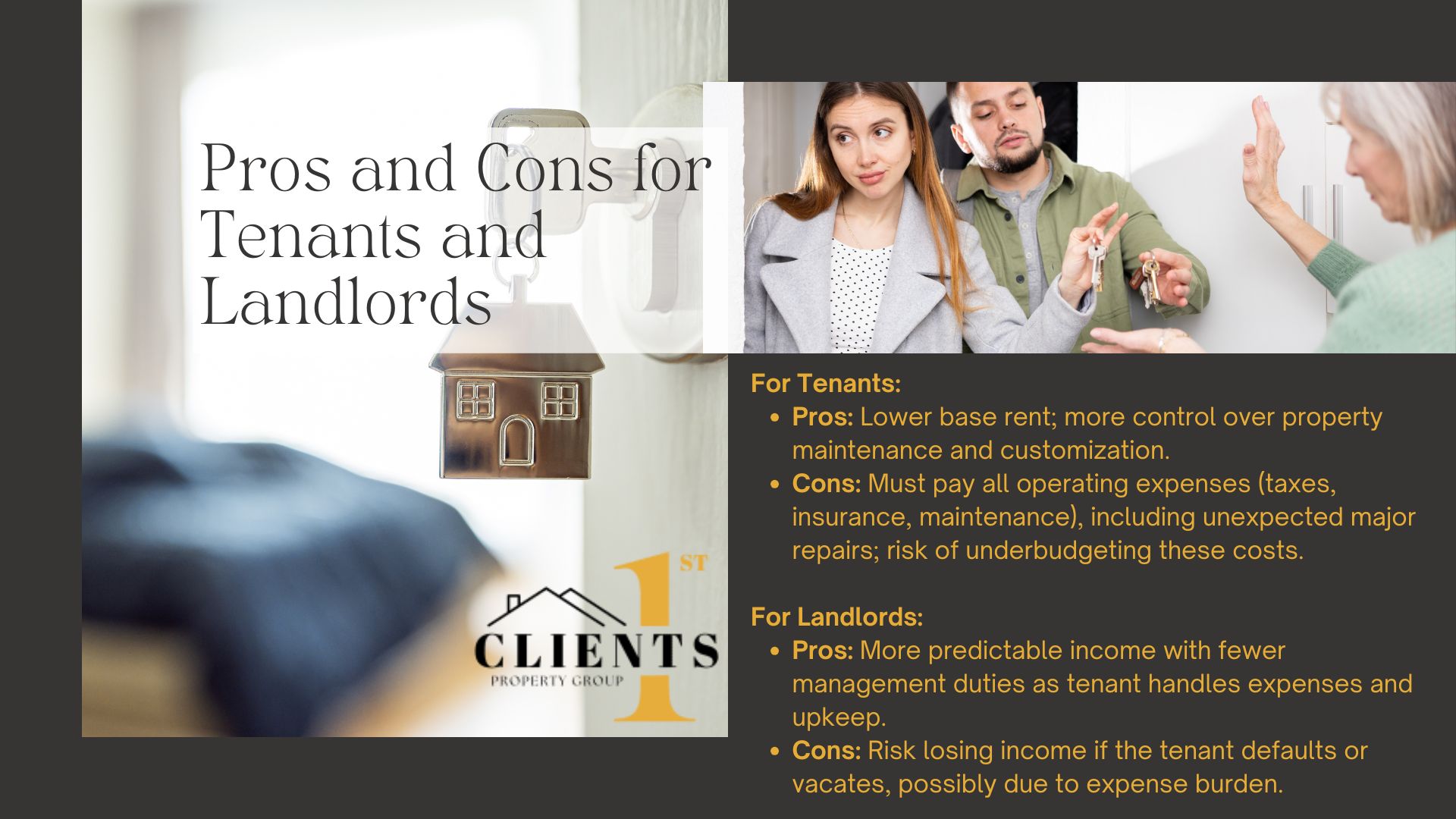
Strong agreements start with smart bargaining. Savvy tenants and owners use creative tactics to align financial goals while protecting their interests. Let’s explore how to structure terms that work for both sides.
Leveraging Base Rent and Expense Caps
Base rent reductions often offset added costs. A 2023 ICSC study found tenants save 18–25% on base payments compared to gross leases. For example:
- Offer to cover HVAC repairs in exchange for 12% lower rent
- Cap annual tax increases at 3% to prevent budget shocks
- Split roof replacement costs 50/50 after 10 years
Expense limits protect against unpredictable spikes. One national retailer negotiated a $15,000 annual ceiling on parking lot maintenance. Always verify municipal tax rates—Charlotte properties saw a 4.2% average increase last year.
Long-Term Lease Implications
Most agreements span 10–15 years, requiring forward-thinking clauses. Clients1st Property Group recently secured these terms for a medical tenant:
| Term | Tenant Benefit | Owner Benefit |
|---|---|---|
| Rent Escalation | 2.5% annual cap | CPI-linked increases |
| Renewal Option | Two 5-year extensions | 10% rent bump at renewal |
| Expense Audits | Annual review rights | Shared accounting fees |
“Clear caps and renewal triggers reduce disputes by 73% in long-term NNN agreements.”
Key action steps:
- Demand detailed expense histories before signing
- Build inflation protections into rent clauses
- Schedule mid-term reviews to adjust caps
Clients1st advisors help clients balance risk through customized lease structures. Their team negotiates 30–40 agreements yearly, ensuring clarity on maintenance duties and tax liabilities.
Conclusion
Structuring commercial agreements requires balancing predictability with flexibility. The NNN model achieves this by transferring property taxes, insurance, and maintenance costs to businesses—freeing owners from variable expenses while giving tenants control over operational budgets.
For landlords, this arrangement delivers stable income with minimal oversight. Tenants gain lower base payments but must plan for location-specific costs like parking lot repairs or municipal tax hikes. Both parties benefit from clear escalation clauses and expense caps during negotiations.
Success hinges on understanding regional cost trends and tenant financial health. A national retailer might secure 20% rent savings upfront, while property investors prioritize creditworthy partners for long-term stability. Every detail matters, from HVAC maintenance terms to renewal triggers tied to inflation metrics.
Ready to optimize your commercial strategy? Clients1st Property Group’s Charlotte-based experts craft tailored solutions for investors and businesses. Call (704) 622-4865 to transform complex agreements into profitable partnerships.