


Real estate markets move in cycles, with periods of growth often followed by corrections. While stability is common, rapid price surges fueled by high demand and low inventory can create unsustainable bubbles. When these bubbles burst, they trigger cascading effects across the economy.
Historical data shows most market crashes stem from overlapping factors. Speculative buying, abrupt shifts in lending standards, and external economic pressures often collide. For example, the 2008 downturn revealed how risky mortgages and lax regulations could destabilize entire systems.
Charlotte-based Clients 1st Property Group (704-622-4865) emphasizes proactive education for buyers and investors. “Recognizing early warning signs helps people make confident decisions,” says their team. This article breaks down key drivers like Federal Reserve policies, employment trends, and regional supply gaps.
Key Takeaways
- Market corrections often follow periods of rapid price growth outpacing wages
- Lending policy changes significantly impact buyer eligibility and demand
- Inventory shortages can create temporary bubbles in competitive markets
- Federal interest rates influence both mortgage costs and investor behavior
- Historical patterns offer valuable lessons for current decision-making
By examining past events and current indicators, you’ll gain tools to navigate shifting conditions. Whether purchasing a first home or expanding an investment portfolio, understanding these principles builds resilience.
Overview of Housing Market Dynamics

Property values rise and fall through a delicate balance between available homes and buyer activity. When builders can’t keep up with population growth or economic shifts, prices often spike. Lenders and regulators also shape these patterns through loan accessibility and zoning rules.
Core Forces Shaping Property Values
Three elements dictate most price movements:
- Available properties versus active buyers
- Mortgage costs set by the Federal Reserve
- Local job growth and land development
Charlotte’s market illustrates this balance. Clients 1st Property Group notes: “Last year’s 12% price jump here stemmed from tech sector relocations outpacing new construction.” Their team helps clients identify neighborhoods where supply might catch up with demand.
| Factor | Supply Impact | Demand Impact |
|---|---|---|
| Low interest rates | Reduces seller motivation | Boosts buyer budgets |
| Strict zoning laws | Limits new construction | Creates scarcity premiums |
| Economic downturns | Increases foreclosures | Reduces qualified buyers |
From Boom to Correction
Price surges typically correct when monthly payments exceed local incomes. The Federal Reserve often intervenes by adjusting rates to cool overheated markets. Recovery usually begins within 18-24 months as inventories stabilize and affordability improves.
Smart investors track building permits and employment data. These indicators help predict whether current prices reflect temporary hype or sustainable growth. Clients 1st Property Group uses this approach in Charlotte’s evolving market, where tech expansions continue reshaping neighborhood dynamics.
Historical Perspectives on Housing Market Crashes
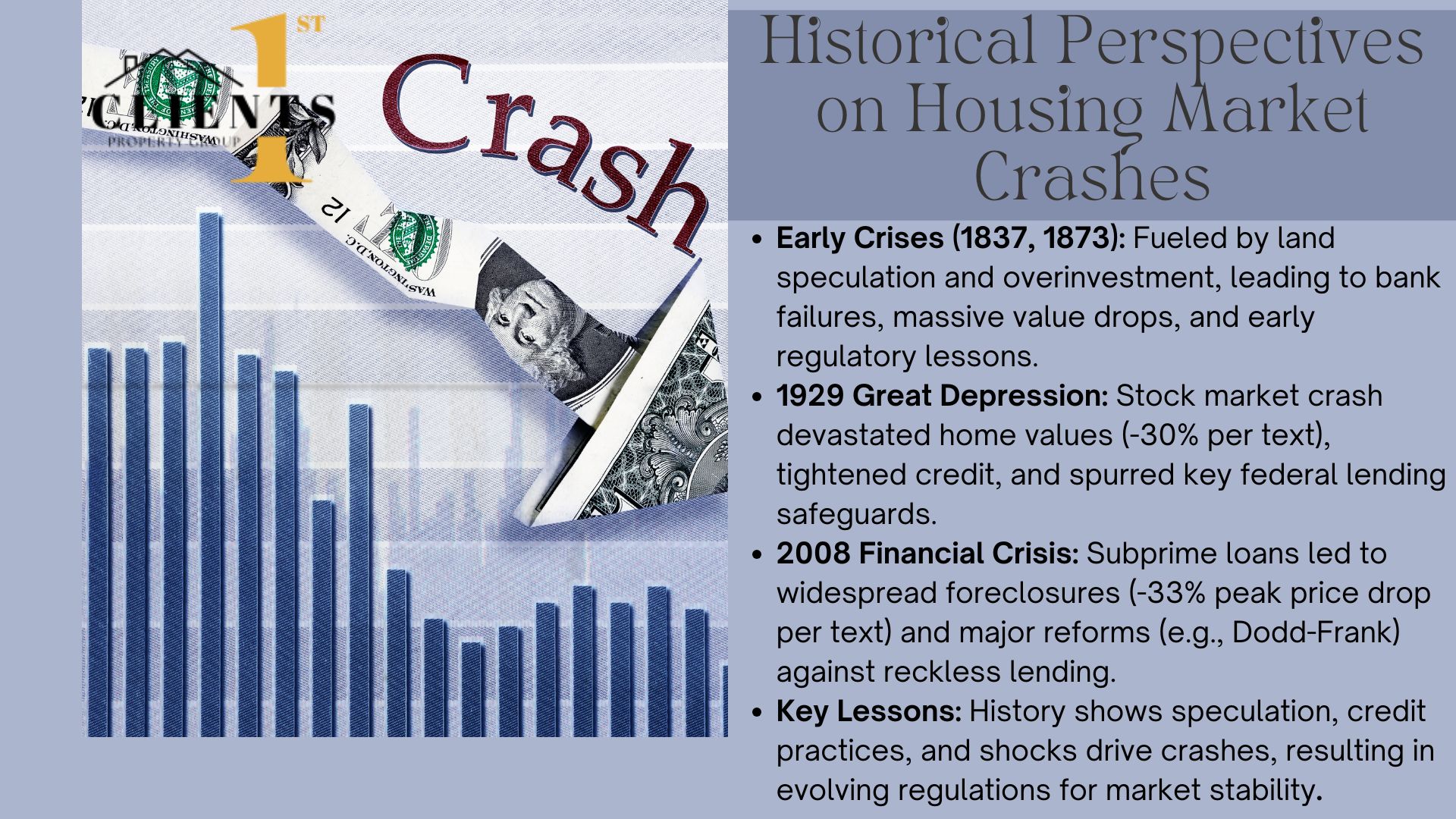
History offers crucial lessons about economic patterns that still shape property decisions today. Four major events reveal how speculation, lending practices, and external shocks create lasting impacts.
Lessons from Early Crises: The Panic of 1837 and 1873
The 1837 collapse began with wild land speculation. Banks issued risky loans, causing 40% of U.S. banks to suspend operations. Home values dropped 50% in cities like New York.
Thirty-six years later, railroad overinvestment triggered the 1873 panic. Foreclosures surged as construction halted. This taught regulators to monitor speculative bubbles – a principle still used today.
Insights from the 1929 and 2008 Crashes
The 1929 stock market crash erased 30% of home values by 1933. Tight credit and unemployment left millions unable to pay mortgages. Federal reforms later created modern lending safeguards.
In 2008, subprime loans caused 7.5 million foreclosures. Lehman Brothers’ collapse exposed systemic risks. “Post-2008 reforms like stress tests prevent reckless lending,” notes Clients 1st Property Group.
| Event | Trigger | Price Impact | Regulatory Response |
|---|---|---|---|
| 1837 | Land speculation | -50% urban | State banking laws |
| 1929 | Stock crash | -30% nationwide | FDIC creation |
| 2008 | Subprime loans | -33% peak drop | Dodd-Frank Act |
These cycles show how demand shifts and credit access drive stability. Modern buyers benefit from stricter loan checks and historical awareness – tools that help avoid past mistakes.
Exploring What Causes Housing Market Crashes

Property value fluctuations often trace back to three interconnected forces: economic instability, relaxed borrowing rules, and collective psychology. When these elements combine, they create conditions where temporary growth masks underlying risks.
Economic Factors and Shifts in Lending Standards
Job losses or reduced incomes quickly impact purchasing power. During the 2000s bubble, 23% of mortgages went to borrowers with limited income verification. Lenders offering adjustable-rate loans with low initial payments fueled this trend.
Modern regulations now require stricter debt-to-income checks. “Tighter standards protect both banks and homebuyers,” notes Clients 1st Property Group. However, non-traditional products like interest-only loans still emerge during competitive markets, testing financial safeguards.
Speculative Behavior and Market Expectations
When investors buy properties solely for short-term gains, prices detach from local earning potential. Phoenix saw a 42% annual price jump in 2021 as speculators outbid primary residents. This creates artificial scarcity, pushing valuations beyond sustainable levels.
Eventually, rising inventory or mortgage rates reset expectations. The 2008 correction began when adjustable rates spiked, leaving many homeowners unable to refinance. Prices adjusted downward until monthly payments aligned with regional wages again.
| Factor | Bubble Phase | Correction Phase |
|---|---|---|
| Lending Rules | Minimal down payments | Strict income verification |
| Investor Activity | Flipping dominates | Long-term holds increase |
| Public Sentiment | “Prices never drop” | Risk aversion returns |
Federal Reserve and Monetary Policy Impacts
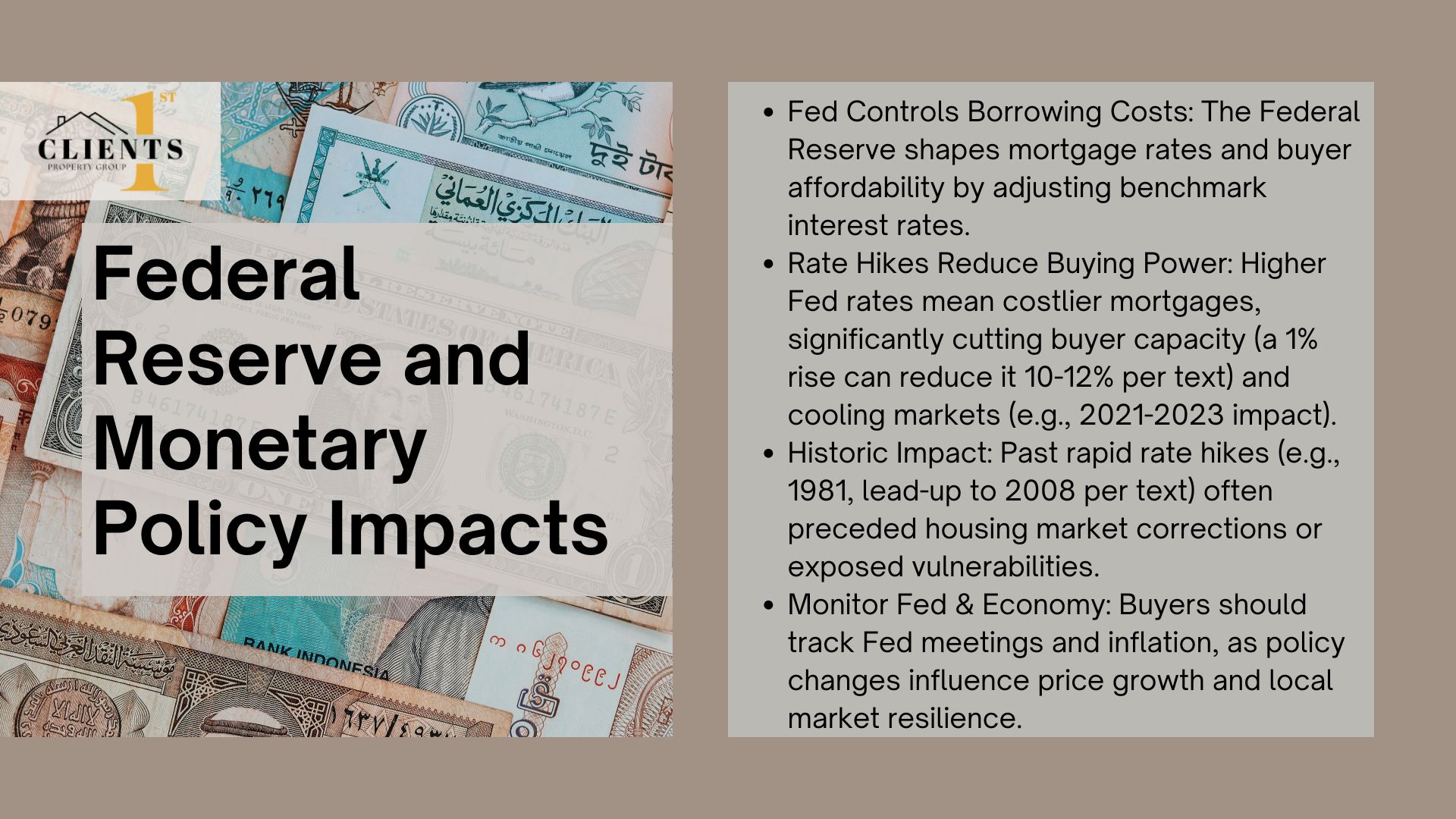
The Federal Reserve directly shapes property markets through its control of borrowing costs. By adjusting benchmark interest rates, it influences how lenders price mortgages and how buyers approach purchases. These decisions ripple through the economy, affecting everything from construction loans to homeowner refinancing.
Interest Rates and Their Effect on Home Prices
When the Fed raises rates, banks follow suit with higher mortgage APRs. A 1% increase can reduce buying power by 10-12%. For example, 30-year fixed rates jumped from 3.1% to 7.1% between 2021-2023, cooling overheated markets in cities like Austin and Boise.
Historical patterns show rapid rate hikes often precede corrections. In 1981, the Fed pushed rates to 20% to combat inflation. Mortgage rates hit 18.45%, causing home values to drop 8% nationwide. Similar impacts occurred during the 2008 crisis when rate adjustments exposed risky loan structures.
| Fed Rate Change | Mortgage Rate Shift | Price Impact |
|---|---|---|
| +2.5% (1980-81) | +8.3% | -8% national |
| -5.25% (2008-09) | -3.1% | +4% recovery |
| +4.25% (2022-23) | +4% | -3% regional |
Current buyers should monitor Fed meeting calendars and inflation reports. Locking rates during stable periods provides budget certainty. As Clients 1st Property Group advises: “Understand how payment changes could affect your long-term plans before committing.”
Future rate increases might slow price growth in competitive areas. However, markets with strong job creation often absorb these shifts better. Tracking employment data alongside Fed announcements helps predict local impacts.
Case Studies: Lessons from Past Crashes
Examining real-world scenarios reveals patterns that shaped entire communities. The 2007-2009 downturn offers critical insights into how financial decisions ripple through neighborhoods and economies.
Analysis of the 2007-2009 Housing Market Decline
Las Vegas saw home values plummet 66% between 2006-2012. Nearly 40% of local mortgages were subprime – loans given to borrowers with poor credit. When adjustable rates reset, payments jumped 60%, triggering widespread defaults.
Foreclosures reached 2.3 million in 2008 alone. Markets like Miami and Phoenix faced 18-month inventory gluts as banks repossessed properties. Over time, prices stabilized only when stricter lending rules and job growth restored balance.
Impact of Subprime Mortgages and Bank Lending Practices
Banks approved $1.3 trillion in subprime loans between 2004-2007. Many required no proof of income. “Lenders treated mortgages like casino chips,” observes a former Federal Reserve analyst. This created a domino effect:
- Delinquent loans overwhelmed financial institutions
- Credit markets froze, halting new construction
- Unemployment doubled in hardest-hit areas
Today’s regulations cap risky lending, but borrowers should still stress-test budgets against future rate hikes. Tracking payment histories and regional job trends helps spot emerging risks before they escalate.
Current Trends and Future Projections in Housing Markets
Recent data reveals a balancing act in property valuations. The S&P CoreLogic Case-Shiller Index shows 5.4% annual home price growth through March 2024 – slower than 2022’s 18% surge but still above historical averages. Mortgage rates now hover near 6.7%, down from last year’s 7.8% peak, creating steadier buyer conditions.
Market Stability and Recovery Prospects
Zillow forecasts 2.9% price growth through 2025, suggesting gradual cooling. “This controlled slowdown mirrors mid-1990s patterns rather than 2008’s collapse,” notes Clients 1st Property Group. Three factors support stability:
- Inventory remains 34% below pre-pandemic levels
- Strong employment keeps default rates near record lows
- 80% of homeowners hold sub-4% mortgage rates, reducing forced sales
| Indicator | 2024 Status | 2025 Projection |
|---|---|---|
| Home Prices | +5.4% | +2.9% |
| Mortgage Rates | 6.7% | 6.1-6.9% range |
| New Listings | +12% YoY | +18% expected |
Risks persist if inflation pushes interest rates higher. A prolonged recession could dampen demand, though current wage growth outpaces home price increases in 58% of U.S. metros. Investors should track building permits – up 7% nationally – as increased supply could ease pricing pressures.
Clients 1st Property Group advises clients: “Focus on markets with diversified job bases and infrastructure investments. These areas typically weather economic shifts better than speculative hotspots.” Their Charlotte team observes tech-driven migration sustaining demand despite broader cooling trends.
Expert Insights from Clients 1st Property Group
Charlotte’s real estate landscape offers a microcosm of national trends amplified by unique local dynamics. As one of America’s fastest-growing metro areas, the city saw home values climb 15% since 2022 despite rising mortgage costs. Clients 1st Property Group leverages hyperlocal data to help clients navigate these conditions.
Charlotte, NC Market Analysis and Local Factors
Inventory shortages persist across Mecklenburg County, with active listings down 40% from pre-pandemic levels. Neighborhoods like SouthPark and NoDa face particular supply constraints, driving competition among buyers. “New construction can’t keep pace with 75+ daily relocations,” explains a Clients 1st analyst.
Three factors stabilize Charlotte’s housing prices:
- Corporate expansions (Lowe’s, Honeywell headquarters)
- Zoning delays limiting high-density projects
- 7.2% annual rent growth pushing renters to buy
| Area | Price Change (2023-24) | Inventory Level |
|---|---|---|
| Uptown | +8.1% | 1.2 months |
| Ballantyne | +6.7% | 1.8 months |
| University City | +4.9% | 2.3 months |
Practical Guidance for Homebuyers and Sellers
First-time buyers should explore FHA loans and down payment assistance programs. Sellers benefit from strategic pricing – homes listed 3-5% below market value often spark bidding wars. Clients 1st recently helped a client secure $12,000 above asking price through targeted pre-listing renovations.
To manage monthly payments:
- Lock rates during Fed announcement lulls
- Consider 7/1 ARM loans if relocating within 10 years
- Negotiate seller-paid rate buydowns
The firm’s data-driven approach identifies neighborhoods like Steele Creek where supply is catching up with demand. “We match clients with areas showing sustainable growth, not just temporary hype,” their team notes. This strategy helped 83% of 2023 buyers avoid overpaying during peak cycles.
Strategic Tips for Navigating Housing Market Volatility
Navigating real estate requires understanding patterns that shape financial futures. Historical data shows economic shifts, lending practices, and policy changes remain critical drivers of stability. By studying past corrections, buyers gain tools to assess risks during periods of rapid price growth.
Federal interest rate adjustments continue influencing affordability, while regional job markets dictate long-term demand. Clients 1st Property Group helps Charlotte residents interpret these signals through localized insights. Their team combines crisis management expertise with proactive strategies for today’s evolving conditions.
Homebuyers should prioritize markets balancing inventory growth with sustainable employment trends. Investors benefit from analyzing building permits and refinancing rates before committing. While fluctuations occur, knowledge transforms uncertainty into informed action.
For personalized guidance tailored to current cycles, contact Clients 1st Property Group at 704-622-4865. Their experts turn complex data into clear roadmaps – because smart decisions begin with understanding the forces shaping tomorrow’s opportunities.