

A well-structured lease agreement is the foundation of a successful landlord-tenant relationship. It not only protects the rights of both parties but also outlines their responsibilities, preventing potential disputes. In the United States, a significant number of rental disputes arise from misunderstandings that could have been avoided with a clear and comprehensive lease.
Clients1st Property Group, with its extensive experience in property management in Charlotte, North Carolina, is here to guide you through the essential components of a lease agreement. Understanding the terms and information that should be included can safeguard your investment and promote harmony between you and your tenants.
For personalized assistance with creating or reviewing your lease agreements, you can contact Clients1st Property Group at (704)622-4865.
Key Takeaways
- A comprehensive lease agreement is crucial for a successful landlord-tenant relationship.
- Essential components include basic identification information and complex legal clauses.
- Clients1st Property Group offers expert guidance in property management.
- A well-structured lease agreement protects your property and clarifies expectations.
- Contact Clients1st Property Group for personalized lease agreement assistance.
The Importance of a Comprehensive Lease Agreement
The importance of a well-structured lease agreement cannot be overstated, as it serves as a legally binding contract between landlords and tenants. A comprehensive lease outlines the terms and conditions that both parties must adhere to, promoting a harmonious and dispute-free tenancy.
Legal Protection for Landlords and Tenants
A well-crafted lease agreement provides crucial legal protection for both landlords and tenants. For landlords, it protects against potential disputes, property damage, and financial losses. For tenants, it clarifies their rights, responsibilities, and what they can expect from the landlord throughout their tenancy.
- A comprehensive lease agreement serves as a legally binding contract that defines the relationship between landlords and tenants.
- It establishes clear rights and responsibilities for both parties, preventing misunderstandings about important terms.
- Tenants benefit from gaining a clear understanding of their obligations and what they can expect from the landlord.
Why Generic Templates May Not Be Sufficient
While generic lease templates are available online, they often fail to address state-specific requirements or unique rental property conditions. This can leave significant legal gaps that could be exploited in disputes. Property management companies like Clients1st Property Group emphasize the importance of tailoring lease agreements to specific properties and situations.
- Generic templates may not comply with local state laws and regulations.
- A tailored rental agreement ensures compliance and provides better protection for both parties.
- Professional property management companies stay updated on changing rental laws to ensure lease agreements remain legally compliant.
Essential Components of What to Include in a Lease Agreement

To ensure a smooth tenancy, a comprehensive lease agreement must cover essential details. A lease agreement is a legally binding document between a landlord and tenant that outlines the terms of the rental property. It is crucial for establishing a clear understanding of the responsibilities and obligations of both parties.
Names and Contact Information
Every lease agreement must begin with clear identification of all parties involved, including full legal names and complete contact information for both landlords and tenants. This ensures that all parties can be reached for matters related to the lease, such as maintenance issues or rent payments. Including accurate contact information is vital for efficient communication.
| Party | Information Required |
|---|---|
| Landlord | Full Name, Address, Phone Number, Email |
| Tenant | Full Name, Address, Phone Number, Email |
Property Description and Identification
A detailed description of the property is necessary to avoid any confusion. This includes the full address, unit number if applicable, and any unique features of the property. The description should identify the property by street name and apartment numbers, specifying which areas are included in the lease, such as storage units or parking spaces.
Lease Term and Dates
The lease term section must clearly specify the exact start and end dates of the agreement. Whether it’s a month-to-month arrangement or a fixed-term lease, clarity on the duration is essential. The lease should also state whether it automatically converts to a month-to-month agreement after the initial term expires and under what conditions early termination might be permitted.
“A lease agreement should clearly outline the lease term, including start and end dates, to avoid disputes.” – Clients1st Property Group
By including these essential components, a lease agreement can effectively protect the interests of both landlords and tenants, ensuring a smooth and legally compliant tenancy.
Financial Terms and Conditions
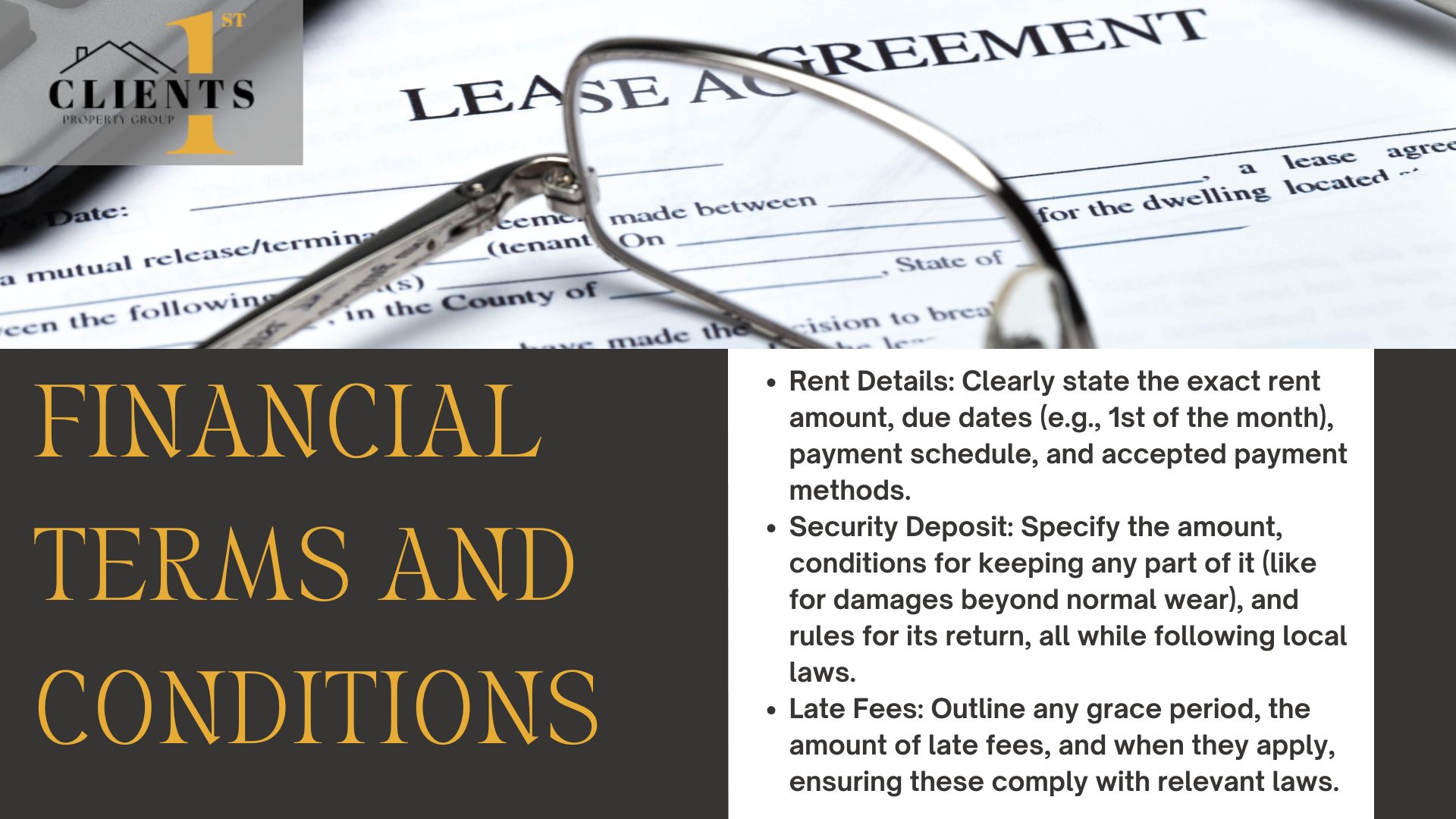
A well-structured lease agreement includes detailed financial terms and conditions that protect both parties’ interests. This section is crucial as it outlines the monetary responsibilities and obligations of both the landlord and the tenant.
Rent Amount and Payment Schedule
The lease agreement should clearly state the exact rent amount and specify whether it’s monthly, bi-weekly, or follows another payment schedule. It’s essential to outline the acceptable forms of payment, such as check, electronic transfer, or credit card, and detail where and how payments should be submitted.
For instance, the agreement might specify that rent is due on the 1st of each month and can be paid via electronic transfer or by mailing a check to a specified address.
| Payment Method | Due Date | Acceptable Forms |
|---|---|---|
| Electronic Transfer | 1st of each month | Bank Transfer, Credit Card |
| 1st of each month | Check |
Security Deposit Requirements
The security deposit amount should be clearly listed in the lease agreement, ensuring compliance with state and local laws regarding the maximum amount that can be collected. The agreement should also specify the conditions under which the security deposit may be withheld, such as property damage beyond normal wear and tear or unpaid rent.
For example, the lease might state that the security deposit is equal to one month’s rent and will be returned within 30 days after the lease ends, provided the tenant has fulfilled all obligations.
Late Fees and Penalties
The lease agreement should clearly define late fees and penalties, including the grace period (if any), the amount of late fees, and when they begin to accrue after a missed payment. It’s crucial to check state laws first when charging late fees to ensure compliance.
For instance, the agreement might specify that a late fee of $25 will be charged if rent is not paid within 5 days of the due date.
Occupancy and Use Policies

Occupancy and use policies form the backbone of a well-structured lease agreement. These policies ensure that all parties involved are aware of their responsibilities and the rules governing the property.
Authorized Occupants and Guests
The lease document should clearly define who is authorized to live in the property, typically limiting occupancy to individuals named in the lease and their minor children. Guest policies should specify the maximum number of consecutive days guests can stay, usually between 7 to 14 days, before they’re considered unauthorized occupants.
Subletting and Assignment Rules
The lease should explicitly state whether tenants are permitted to sublet the property or assign their lease to another party. If allowed, the approval process should be clearly outlined in a specific clause. This protects the landlord’s interests while providing flexibility for tenants.
Property Use Restrictions
Property use restrictions are critical for maintaining a peaceful living environment. These can include prohibitions on illegal activities, commercial use of residential property, and nuisances. Additionally, rules regarding smoking and pet policies should be clearly defined. For example, a clause might specify whether smoking is prohibited entirely or restricted to designated outdoor areas.
| Policy | Description | Example |
|---|---|---|
| Authorized Occupants | Individuals named in the lease and their minor children | John Doe and family |
| Guest Policy | Maximum consecutive days guests can stay | 7-14 days |
| Subletting/Assignment | Whether tenants can sublet or assign their lease | Requires landlord approval |
“A well-crafted lease agreement is essential for a harmonious landlord-tenant relationship.”
Maintenance and Property Care Responsibilities

A well-structured lease agreement must clearly outline the maintenance and property care responsibilities to avoid potential disputes between landlords and tenants. This clarity ensures that both parties understand their obligations, maintaining the property in good condition throughout the tenancy.
Landlord Maintenance Obligations
The landlord’s maintenance obligations typically include maintaining the structural elements of the property, major systems such as HVAC, plumbing, and electrical, and ensuring compliance with building codes and health standards. “Landlords have a responsibility to maintain the property and make necessary repairs,” as stated by industry experts. The landlord is also responsible for pest control and extermination upon notice by the tenant, unless the infestation is a result of the tenant’s negligence.
Tenant Maintenance Duties
Tenant maintenance duties generally involve keeping the property clean and sanitary, proper use of appliances and fixtures, and minor maintenance tasks like replacing light bulbs or air filters. Tenants are expected to maintain the property in good condition and are responsible for damages caused by their negligence or misuse. As Clients1st Property Group recommends, the lease should specify that tenants agree the property was in good repair when they moved in.
Reporting Procedures for Repairs
The lease should establish clear procedures for reporting maintenance issues, including emergency contact information, expected response times, and preferred communication methods. Landlords must provide adequate notice before entering the property for repairs, typically 24-48 hours, except in emergency situations. Tenants should be required to report any maintenance issues promptly to prevent further damage.
By clearly defining maintenance and property care responsibilities, landlords and tenants can work together to maintain the property, preventing disputes and ensuring a positive rental experience.
Special Clauses and Policies
In addition to the basic terms, a lease agreement should include special clauses that outline specific policies and rules for the property. These clauses address particular aspects of property use that require detailed guidelines beyond standard lease provisions.
Pet Policies and Deposits
Pet policies should be clearly outlined in the lease, specifying whether pets are allowed, the type and size of pets permitted, and any additional deposits or fees required. It’s also essential to establish rules for pet behavior and waste management to maintain a clean and safe environment for all tenants.
Smoking and Noise Restrictions
The lease should clearly indicate whether smoking is prohibited entirely on the property, allowed only in designated outdoor areas, or permitted within the rental unit. Additionally, noise restriction clauses should establish quiet hours and outline consequences for repeated noise complaints to ensure a peaceful living environment.
Parking and Storage Rules
Parking clauses should specify assigned spaces, guest parking rules, and restrictions on vehicle types, such as commercial vehicles, RVs, or boats. Storage policies should outline which storage areas are included in the lease and permitted uses for storage spaces.
Utilities and Services Responsibilities
The lease should clarify which utilities are included in the rent and which are the tenant’s responsibility to establish and maintain. This clarity helps prevent misunderstandings and ensures that tenants are aware of their obligations regarding utility payments.
By including these special clauses in a lease agreement, landlords can protect their property and ensure a harmonious living environment for their tenants.
Legal Protections and Disclosures
A comprehensive lease agreement must include legal protections and disclosures to comply with federal, state, and local laws. This section is crucial for protecting the interests of both landlords and tenants by ensuring transparency and adherence to legal requirements.
Required State and Federal Disclosures
Required federal disclosures include lead-based paint disclosures for properties built before 1978 and flood hazard notifications for applicable properties. State-specific disclosures vary widely and may include information about mold, bed bugs, radon, or other environmental hazards relevant to the property location. For instance, in North Carolina, landlords are required to disclose certain information about the property’s condition and potential hazards.
Right of Entry and Inspection Terms
The lease agreement should specify the conditions under which a landlord may legally enter the property, typically including maintenance, inspections, emergencies, and showing the property to prospective tenants. Notice periods for landlord entry should comply with state laws, generally requiring 24-48 hours advance notice except in genuine emergencies. This ensures that tenants’ rights to privacy are respected while allowing landlords to perform necessary duties.
Insurance Requirements
Insurance requirements should clarify that landlords typically insure the building structure while tenants are responsible for obtaining renter’s insurance to cover their personal belongings. This distinction is important for avoiding confusion about liability and ensuring that both parties are adequately protected in case of unforeseen events.
By including these legal protections and disclosures, a lease agreement can effectively safeguard the interests of both landlords and tenants, promoting a positive and legally compliant rental experience.
Lease Termination and Renewal Terms
Understanding the terms and conditions surrounding lease termination and renewal is crucial for both landlords and tenants. A comprehensive lease agreement should clearly outline these terms to avoid potential disputes and provide certainty for both parties.
Early Termination Conditions
Early termination conditions should specify the circumstances under which a tenant may legally break the lease, such as military deployment or uninhabitable conditions. Financial penalties for breaking a lease should also be clearly defined, typically involving continued rent payments until a new tenant is found or payment of a specified lease break fee.
| Termination Reason | Notice Period | Penalty |
|---|---|---|
| Military Deployment | 30 days | No penalty |
| Uninhabitable Conditions | Immediate | No penalty |
| Other Reasons | 60 days | Lease break fee |
Renewal Procedures
Renewal procedures should detail the timeline and process for extending the lease, including when notice must be given. Typically, a 30- to 60-day notice is required before lease expiration.
- Review lease agreement for renewal terms
- Provide notice within specified timeframe
- Negotiate new lease terms if necessary
Move-Out Requirements
Move-out requirements should specify the condition in which the property must be left, including cleaning standards and removal of all personal property. The lease should also outline the process for final inspection and returning keys.
Expert Lease Agreement Services from Clients1st Property Group
Clients1st Property Group is your trusted partner for creating legally sound lease agreements in Charlotte, North Carolina. Their team of experienced property management professionals understands the intricacies of North Carolina landlord-tenant laws, ensuring that all lease agreements are fully compliant with state and local regulations.
The company’s lease agreement services include:
- Customized lease agreements tailored to address specific property features and owner concerns
- Carefully crafted clauses that protect property owners’ investments while establishing clear expectations for tenants
- Regular updates to ensure agreements remain compliant with changing laws and regulations
- Ongoing support for landlords to help them understand and enforce lease provisions when issues arise during tenancy
By working with Clients1st Property Group, property owners benefit from reduced legal exposure and fewer tenant disputes thanks to thorough, clearly written lease agreements. For personalized assistance with creating or reviewing lease agreements for your Charlotte area rental property, contact Clients1st Property Group at (704)622-4865.
Conclusion
Creating a thorough lease agreement is essential for property owners to protect their investments and ensure a smooth tenancy. A comprehensive lease agreement outlines the terms and conditions, providing clarity and legal protection for both landlords and tenants. By including essential components, landlords can prevent misunderstandings and potential disputes. Clients1st Property Group in Charlotte, North Carolina, specializes in crafting customized lease agreements that address specific property needs. For expert assistance, contact them at (704)622-4865. A well-crafted lease agreement is a valuable tool for managing tenant relationships and protecting your property investment.