

Did you know that a thorough tenant screening process can reduce financial risks by up to 70% for landlords? Effective screening is crucial for finding reliable, long-term tenants who will care for your rental property and pay rent on time.
As a landlord or property owner, protecting your investment is paramount. Clients1st Property Group in Charlotte, North Carolina, with years of professional experience, guides you through the essential steps of tenant screening. By establishing clear rental criteria and evaluating potential tenants thoroughly, you can significantly reduce the risk of problem tenants, evictions, and property damage.
Key Takeaways
- Understand the importance of thorough tenant screening for protecting your rental property.
- Learn how to establish clear rental criteria to attract reliable tenants.
- Discover the essential steps involved in the tenant screening process.
- Find out how to handle application approvals and denials professionally.
- Maximize your return on investment by minimizing vacancies and property damage.
Why Effective Tenant Screening Matters for Property Owners
The importance of thorough tenant screening cannot be overstated for landlords seeking to minimize risks. Effective tenant screening is a critical component of successful property management, directly impacting the profitability and sustainability of rental properties.
Protecting Your Investment Property
Protecting your investment property starts with thorough tenant screening, serving as your first line of defense against potential property damage, unpaid rent, and costly evictions. By vetting applicants thoroughly, landlords can avoid the financial pitfalls associated with problematic tenants.
Reducing Financial Risks and Vacancies
Comprehensive screening helps identify tenants with a history of responsible behavior, including timely rent payments and property maintenance. This process significantly reduces financial risks associated with problem tenants, who can cost landlords thousands in legal fees, repairs, and lost rental income. Moreover, finding reliable, long-term tenants through proper screening minimizes vacancy periods, one of the biggest financial drains for property owners.
Finding Reliable, Long-Term Tenants
Quality tenants identified through thorough screening tend to stay longer, treat the property with respect, and communicate effectively with landlords. This creates a more stable and profitable rental situation. Clients1st Property Group has helped numerous property owners develop screening systems that consistently identify dependable tenants while minimizing risk to their investment properties.
By implementing a rigorous tenant screening process, landlords can ensure they’re choosing responsible individuals who will pay rent on time, take care of the property, and follow lease agreements. This not only protects the property but also contributes to a positive landlord-tenant relationship.
- Thorough screening identifies responsible tenants with a history of timely rent payments and property care.
- Effective screening reduces financial risks and associated costs with problem tenants.
- Reliable, long-term tenants minimize vacancy periods and turnover costs.
Establishing Clear Rental Criteria Before You Begin

To streamline the tenant screening process, landlords must first establish clear and objective rental criteria. This foundational step ensures consistency, reduces bias, and helps protect landlords from potential fair housing complaints.
Setting Income-to-Rent Ratio Requirements
Setting specific income-to-rent ratio requirements is crucial. Typically, landlords require applicants to have an income that is 2.5 to 3 times the monthly rent. This helps ensure that tenants can afford the property comfortably, reducing the risk of late or missed payments.
Determining Credit Score Thresholds
Credit score thresholds provide valuable insights into an applicant’s financial responsibility. Most landlords require a minimum credit score between 620-650, though this can vary based on market conditions and property type.
Defining Rental History Standards
Defining rental history standards allows landlords to evaluate how applicants have treated previous rental properties. Verifying at least 1-2 years of positive rental history is a common practice among successful landlords.
Criminal Background Check Parameters
Criminal background check parameters must be carefully established to comply with fair housing laws while protecting the property. Focus on relevant convictions that might impact tenant suitability.
Documenting your rental criteria before advertising the property creates transparency in the application process and allows potential tenants to self-screen before applying. Key benefits include:
- Ensuring consistency in the tenant screening process
- Reducing bias and the risk of fair housing complaints
- Helping applicants understand the requirements upfront
- Allowing for more efficient screening by focusing on qualified applicants
Creating a Comprehensive Rental Application
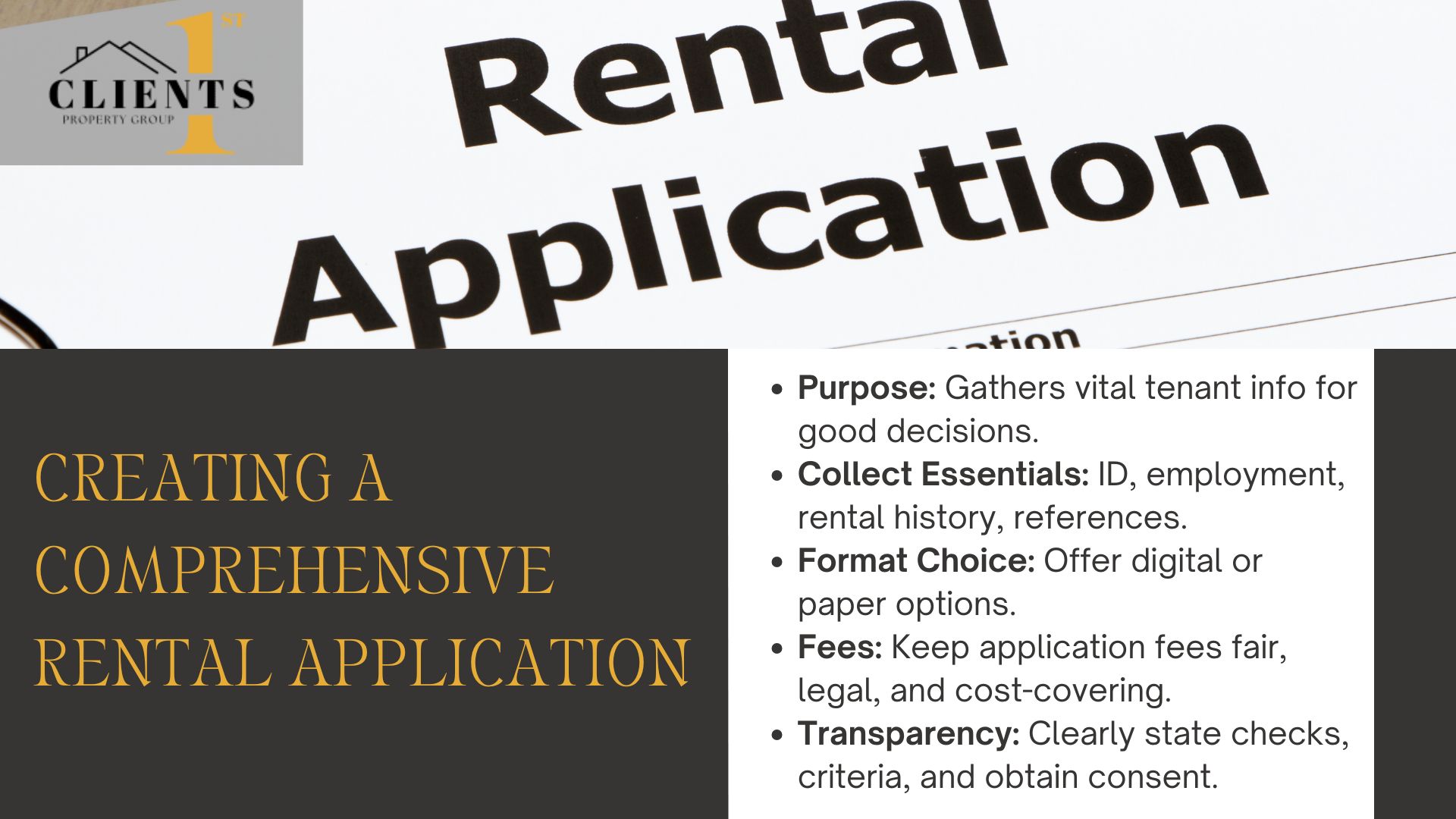
The foundation of a successful tenant screening process lies in creating a detailed rental application. This document serves as the primary tool for gathering essential information about potential tenants, enabling landlords to make informed decisions.
Essential Information to Collect from Applicants
A comprehensive rental application should collect vital details from applicants, including personal identification, employment verification, rental history, and references. This information is crucial for assessing an applicant’s creditworthiness and reliability as a tenant.
Digital vs. Paper Application Options
Landlords can choose between digital and paper application formats. Digital applications offer advantages like faster processing and automated data collection, while paper applications may be preferred by some landlords and applicants.
Application Fee Considerations and Compliance
When determining application fees, landlords must balance covering their screening costs with remaining competitive in the market and complying with state laws regulating maximum application fees.
To ensure transparency and compliance, the rental application should clearly outline what information will be verified and the criteria used to evaluate applicants. Including consent forms for background checks and credit reports is also essential.
Pre-Screening Techniques to Save Time and Effort

Before diving into comprehensive background checks, landlords can benefit from pre-screening applicants. This initial step allows property owners to filter out unqualified leads, saving time and resources in the long run.
Effective Phone Interview Questions
Conducting phone interviews with potential tenants can reveal crucial information about their rental needs, timeline, income, and other qualifying factors. By asking the right questions, landlords can quickly gauge an applicant’s suitability for the rental property.
Pre-Qualification Questionnaires
Pre-qualification questionnaires delivered via email or online forms help standardize the initial screening process. These questionnaires create documentation of applicant responses, making it easier to compare candidates later on.
Setting Clear Expectations in Rental Listings
By specifying requirements like income thresholds, pet policies, and credit expectations in rental listings, landlords encourage self-screening by potential applicants. This approach helps attract more qualified applicants and reduces the number of unqualified leads.
Pre-screening techniques enable landlords to efficiently filter out clearly unqualified applicants before investing time and money in comprehensive background checks and property showings. By implementing these methods, landlords can significantly reduce the number of unqualified applicants who proceed to formal applications, saving considerable time and resources.
How to Screen Tenants: The Step-by-Step Process

To ensure you’re renting to reliable tenants, a systematic screening process is essential. This process not only helps in identifying potential risks but also in finding the right tenant for your property.
Reviewing Applications Systematically
The first step in the tenant screening process is to review applications systematically. This involves checking for completeness and comparing the provided information against your established rental criteria. A thorough review at this stage helps in filtering out unqualified applicants early on.
Running Credit and Background Checks
Running comprehensive credit and background checks through reputable screening services is crucial. These checks provide objective data about an applicant’s financial responsibility, criminal history, and eviction records. Utilizing tenant-screening software can expedite this process, providing comprehensive reports in minutes.
Verifying Employment and Income Documentation
Verifying employment and income documentation is vital to confirm an applicant’s ability to afford the rent. This typically involves reviewing pay stubs, employment verification letters, or tax returns. This step ensures that the tenant has a stable income source.
Contacting Previous Landlords Effectively
Contacting previous landlords is a critical step that requires asking specific questions. These questions should cover payment history, property care, lease compliance, and whether they would rent to the applicant again. This step can uncover valuable insights into the applicant’s rental behavior.
Each step in the screening process should be documented thoroughly, creating a paper trail that demonstrates fair and consistent evaluation of all applicants. The most effective screening processes evaluate applicants holistically, considering the complete picture rather than disqualifying based on a single factor, while still maintaining objective standards.
- A systematic review of applications helps in early filtering of unqualified applicants.
- Comprehensive credit and background checks provide critical insights into an applicant’s history.
- Verifying employment and income ensures the applicant’s financial stability.
- Contacting previous landlords offers valuable information on the applicant’s rental history.
By following this step-by-step process, landlords can significantly reduce the risks associated with renting out their properties. It’s about finding a balance between thoroughness and fairness, ensuring that the screening process is both effective and compliant with fair housing laws.
Fair Housing Compliance in Your Screening Process
To avoid potential lawsuits, landlords must understand and implement fair housing compliance in their screening processes. Ensuring that your rental criteria meet all local, state, and federal fair housing laws is a critical first step. This involves establishing objective criteria that do not consider factors such as race, national origin, or religion when processing rental applications.
Understanding Federal and State Fair Housing Laws
Fair housing compliance is non-negotiable in the tenant screening process. Landlords must understand and adhere to federal, state, and local laws that prohibit discrimination. Recognizing protected classes and how these protections impact every aspect of your screening procedures and rental criteria is essential. As stated by the U.S. Department of Housing and Urban Development, “The Fair Housing Act prohibits discrimination in the sale, rental, and financing of dwellings based on race, color, religion, sex, national origin, disability, and familial status.”
“The Fair Housing Act prohibits discrimination in the sale, rental, and financing of dwellings based on race, color, religion, sex, national origin, disability, and familial status.” – U.S. Department of Housing and Urban Development
Avoiding Discriminatory Practices and Questions
Avoiding discriminatory practices requires establishing objective, measurable screening criteria that are applied consistently to all applicants, regardless of their protected characteristics. Questions on applications and during interviews must be carefully crafted to focus on relevant qualifications without inadvertently discriminating against protected groups.
Documenting Your Screening Decisions
Documenting your screening decisions with clear records of why applicants were approved or denied helps demonstrate fair housing compliance if your practices are ever questioned. Landlords should regularly review and update their screening processes to reflect changes in fair housing laws and ensure continued compliance with evolving regulations.
By prioritizing fair housing compliance, landlords can protect themselves from potential lawsuits and ensure a fair and equitable tenant screening process.
Handling Application Approvals and Denials Professionally
Professional handling of application approvals and denials is essential for landlords to uphold their reputation and comply with fair housing regulations. When managing rental applications, it’s crucial to maintain a systematic approach to ensure fairness and transparency.
Communicating Acceptance to Qualified Applicants
Once a qualified applicant is identified, it’s vital to communicate acceptance promptly. This timely communication is necessary because prospective tenants often apply to multiple properties simultaneously. By reaching out immediately, landlords can secure the applicant’s interest and finalize the rental agreement terms.
Clear communication regarding next steps, such as lease signing, security deposit payment, and move-in procedures, helps in maintaining a smooth leasing process. Landlords should ensure that all necessary documents are ready and explained clearly to the new tenant.
Legally Denying Unqualified Applicants
When denying an application, landlords must reference their objective screening criteria to ensure compliance with fair housing laws. It’s essential to avoid making statements that could be interpreted as discriminatory. Providing specific, objective reasons for denial, such as failing to meet income requirements or credit thresholds, helps in maintaining transparency.
Setting Clear Timelines for Responses
Establishing clear timelines for responses from approved applicants is crucial for maintaining momentum in the leasing process. This approach allows landlords to move on to other applicants if necessary, ensuring that the rental property does not remain vacant for an extended period.
| Best Practices | Description | Benefits |
|---|---|---|
| Prompt Communication | Reach out to approved applicants immediately | Secures tenant’s interest, faster leasing process |
| Clear Documentation | Provide detailed information on next steps and terms | Reduces misunderstandings, ensures compliance |
| Objective Denial Reasons | Reference specific screening criteria for denials | Maintains transparency, avoids discrimination claims |
By following these guidelines, landlords can ensure a professional and compliant approach to handling application approvals and denials, ultimately protecting their reputation and minimizing potential legal issues.
Tenant Screening Tools and Resources for Landlords
Modern tenant screening tools have revolutionized the way landlords evaluate potential tenants. With the array of resources available, landlords can now make more informed decisions efficiently.
Background Check Services Comparison
Background check services vary significantly in terms of coverage, accuracy, and cost. Landlords can choose from basic criminal checks to comprehensive packages that include eviction history and credit reports. For instance, services like DoorLoop integrate credit checks, eviction history, and criminal background reports directly into the workflow, streamlining the decision-making process.
Credit Report Options for Landlords
Credit report options for landlords typically include tenant-specific reports that don’t affect the applicant’s credit score. These reports provide essential information about payment history and financial responsibility. Powered by services like TransUnion SmartMove, landlords can access detailed screening results, including credit scores and eviction records.
Property Management Software Solutions
Property management software solutions increasingly offer integrated screening tools that automate the application and screening process. This integration enables landlords to request and review screening reports with just a few clicks, enhancing efficiency and reducing manual follow-ups.
Partner with Clients1st Property Group for Expert Tenant Screening
Landlords who implement a rigorous tenant screening process can significantly reduce potential risks associated with rental properties. Effective screening is a critical investment in your property’s long-term profitability and protection, requiring both knowledge of best practices and consistent implementation.
While this guide provides a comprehensive overview of tenant screening processes, many landlords find that professional property management services offer expertise and efficiency that’s difficult to match independently. Clients1st Property Group in Charlotte, North Carolina specializes in thorough screening that protects your investment while maintaining full compliance with fair housing laws.
Our professional screening services include comprehensive background checks, credit analysis, income verification, and rental history investigation, all conducted with attention to detail and legal compliance. By partnering with Clients1st Property Group, you gain access to professional screening tools, established relationships with screening services, and years of experience evaluating tenant applications.
To learn how our expert tenant screening services can help you find reliable, responsible tenants for your Charlotte area rental properties, contact Clients1st Property Group today at (704)622-4865.