

Finding neighborhoods poised for growth in Charlotte, NC, requires a blend of market insight and local knowledge. Emerging areas often show early signs like new businesses, infrastructure upgrades, or rising property values. These indicators suggest a community transitioning toward long-term appeal for residents and investors alike.
Gentrification dynamics and shifting housing demands play key roles in neighborhood evolution. For example, areas near parks or transit hubs frequently attract development. Local schools and amenities also drive interest, making these zones ideal for families or those seeking convenience.
Clients 1st Property Group, located in Charlotte, North Carolina, emphasizes the value of early identification. Their team advises clients to monitor construction projects and demographic shifts. Reach them at (704) 622-4865 for tailored guidance on market trends and investment potential.
Key Takeaways
- New businesses and infrastructure often signal neighborhood growth.
- Proximity to parks, schools, or transit can boost property value.
- Early investment in emerging areas may offer affordable opportunities.
- Local real estate experts provide critical market insights.
- Tracking construction projects helps predict future demand.
Understanding the Essence of Up-and-Coming Neighborhoods
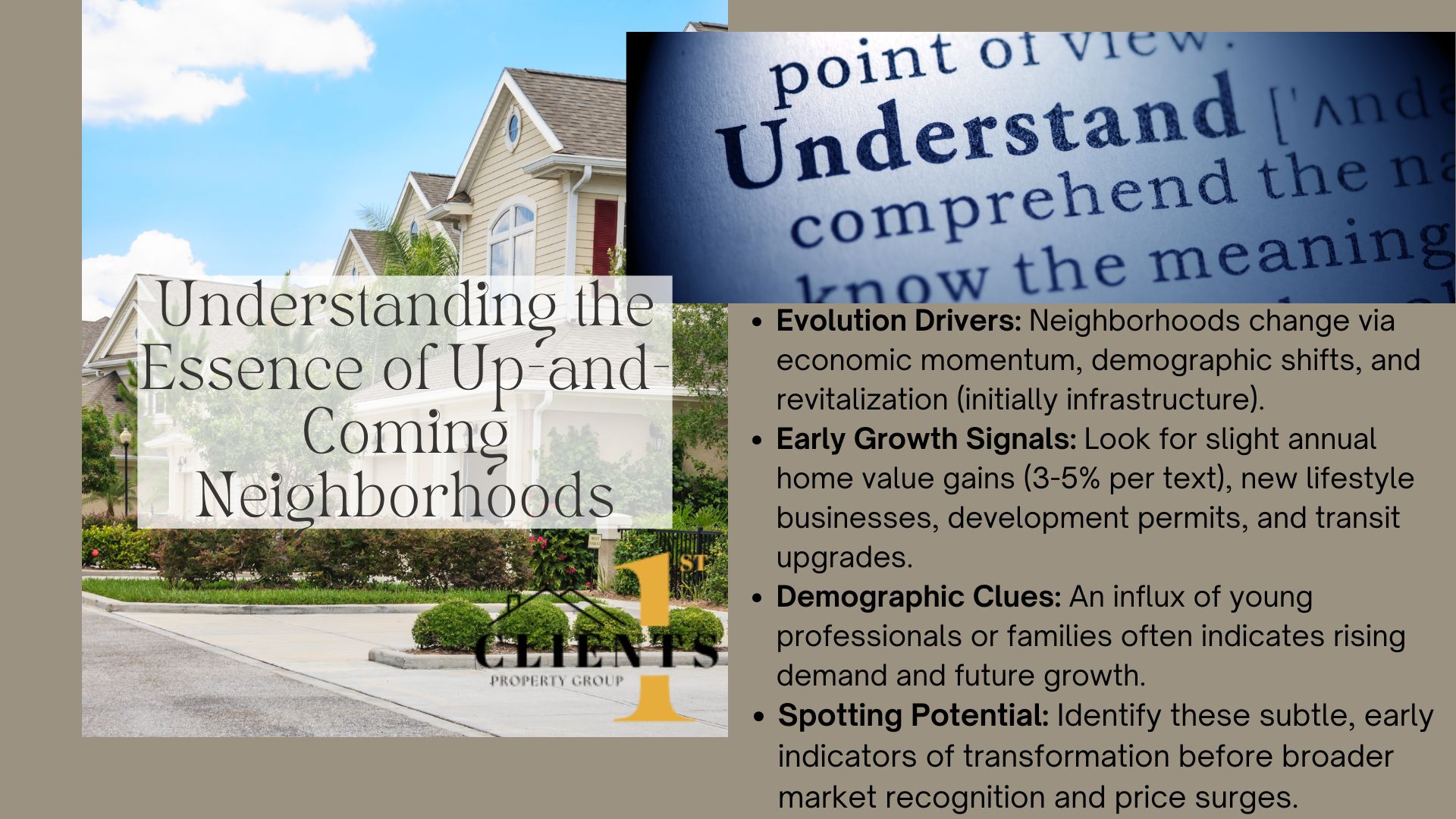
Urban landscapes shift quietly, but certain signals reveal areas transitioning toward desirability. These zones often balance affordability with gradual improvements, creating opportunities for residents and investors to grow alongside the community.
Defining Neighborhood Evolution
Neighborhood evolution occurs when economic momentum and shifting demographics reshape a location’s appeal. Revitalization projects, such as renovated public spaces or updated housing stock, often spark this change. Gentrification can follow, though early-stage shifts focus on infrastructure upgrades rather than displacement.
Early Signs of Transformation
Subtle clues hint at a neighborhood’s potential. Slight increases in property values—3-5% annually—often precede major growth. New coffee shops, fitness studios, or boutique retailers frequently appear before larger chains. Other indicators include:
- Permits for mixed-use developments or residential projects
- Expanded public transit routes or bike lanes
- Increased community events hosted by local organizations
Demographic data also plays a role. A rising percentage of young professionals or families suggests shifting demand. In cities like Nashville and Austin, neighborhoods near tech hubs saw 20% population growth within five years before becoming investment hotspots.
Clients 1st Property Group monitors these patterns closely. Their team analyzes zoning changes and business licensing trends to pinpoint areas where early action yields long-term benefits. As one agent notes, “The best opportunities emerge when you notice sidewalks being repaired before home prices surge.”
Spotting Key Indicators in Charlotte’s Urban Landscape

Charlotte’s real estate market thrives on subtle shifts that reveal future hotspots. Observing local media coverage and infrastructure upgrades helps pinpoint areas gaining momentum. For instance, the Charlotte Observer recently highlighted Camp North End’s transformation from industrial space to a mixed-use hub, attracting tech startups and art galleries.
Local Market Trends and Press Mentions
Media attention often foreshadows growth. Neighborhoods like Optimist Park saw 12% annual price increases after being featured in the Charlotte Business Journal for adaptive reuse projects. Key metrics to track include:
- Homes selling 10-15 days faster than city averages
- Commercial permits for cafes or co-working spaces
- Zoning changes allowing higher-density housing
| Area | Recent Development | Price Change (2023) |
|---|---|---|
| West Boulevard | Light rail station expansion | +9.4% |
| Belmont | New greenway completion | +14.1% |
| Enderly Park | Microbrewery openings | +18.3% |
Neighborhood Amenities and Access
Proximity to parks and transit drives desirability. The Cross Charlotte Trail extension boosted property values in adjacent communities by 7-11%. As Clients 1st Property Group notes:
“Areas near the Lynx Blue Line stations consistently outperform others in appreciation rates.”
New grocery stores like Publix in Villa Heights signal retail confidence, while community gardens in Historic West End enhance neighborhood appeal. These amenities create ripple effects—nearby homes often see 5-8% value jumps within 18 months.
How to Identify Up and Coming Neighborhoods
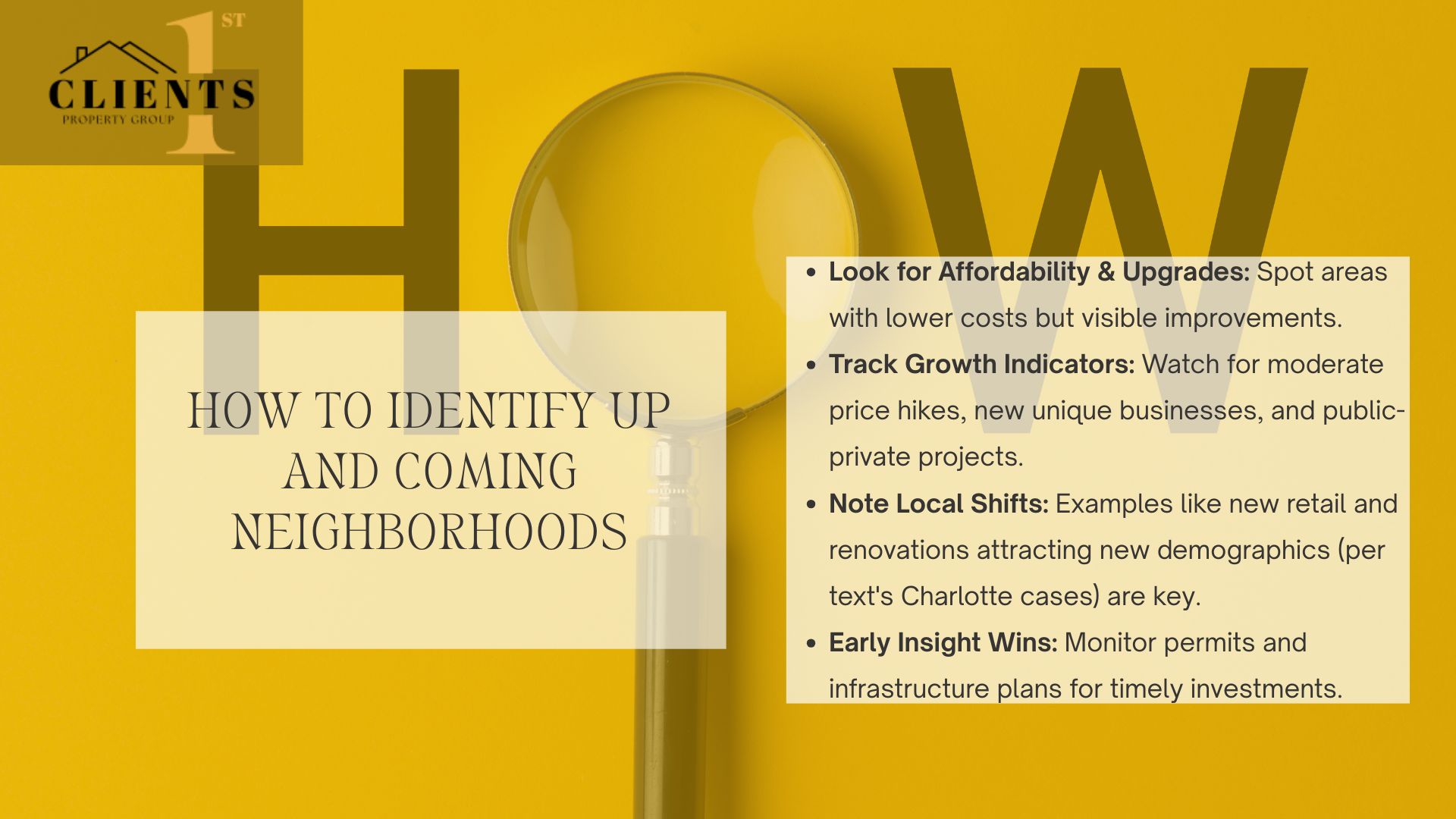
Transitional neighborhoods blend affordability with opportunity, offering distinct advantages over established areas. These zones balance lower entry costs with visible momentum—think renovated storefronts alongside older homes—creating fertile ground for long-term appreciation.
What Sets Transitional Areas Apart
Unlike mature markets, emerging communities often showcase mixed-use construction and infrastructure upgrades. Recent zoning changes in Charlotte’s Enderly Park led to 18% annual price growth as microbreweries replaced vacant lots. Key differentiators include:
- Moderate price increases (5-10% yearly) outpacing city averages
- Local businesses transitioning from basic services to specialty retailers
- Public-private partnerships funding park renovations or sidewalk expansions
Areas like Villa Heights demonstrate this shift. New Publix-anchored plazas and renovated bungalows now coexist, attracting younger residents. “Buyers here get more square footage than in SouthEnd, plus proximity to NoDa’s arts scene,” notes a Clients 1st Property Group agent.
Early detection remains critical. Investors monitoring permit filings near the Cross Charlotte Trail extension secured properties before recent 12% valuation jumps. Strategic partnerships with local real estate experts help navigate these nuanced markets, where timing determines returns.
Monitoring Real Estate Trends and Market Values
Data drives decisions in Charlotte’s dynamic property market. Tracking metrics like price shifts and sales velocity reveals patterns that signal emerging opportunities. Neighborhoods with consistent growth often show distinct trends long before broader recognition.
Tracking Price Fluctuations and Sales Data
Price trends act as a neighborhood’s economic pulse. Areas like Enderly Park saw 18% annual appreciation as microbreweries opened, outpacing citywide averages. Investors analyze:
- Quarterly median price changes exceeding 4%
- Homes selling 20% faster than adjacent communities
- Increased sales volume for properties under $400k
| Area | 2023 Price Growth | Avg. Days on Market |
|---|---|---|
| Villa Heights | +14.7% | 11 |
| West Boulevard | +9.1% | 18 |
| Belmont | +12.3% | 14 |
Days on Market and Buyer Competition
Shrinking inventory periods indicate rising demand. When listings in Optimist Park dropped from 30 to 9 days, multiple-offer scenarios became common. Properties selling within two weeks often see final prices 6-8% above asking.
Clients 1st Property Group leverages MLS data to identify these shifts early. “A 15% year-over-year sales increase in a specific price bracket often precedes retail investments,” notes their lead analyst. This approach helped clients secure properties in NoDa before its 22% valuation jump since 2021.
Evaluating the Impact of Infrastructure Developments
Infrastructure shapes cities like Charlotte by creating ripple effects across housing markets and community appeal. Strategic improvements in transportation and public facilities often precede measurable growth in property demand and neighborhood vitality.
Transportation as a Growth Catalyst
Major transit projects reduce commute times while attracting new residents. Charlotte’s proposed Silver Line light rail extension could connect eastside neighborhoods to uptown in under 20 minutes. Similar projects in Atlanta boosted adjacent home values by 22% within three years.
Key transportation impacts include:
- 15-30% faster commute times near new stations
- Increased foot traffic for local businesses
- Higher density zoning approvals along transit corridors
| City | Project | Value Increase |
|---|---|---|
| Nashville | Downtown Tunnel | +18% |
| Austin | MetroRail Expansion | +27% |
| Charlotte | CityLYNX Gold Line | +13% |
Schools and Healthcare Drive Family Demand
New educational and medical facilities create self-sustaining communities. Charlotte’s recent $50 million elementary school in Villa Heights led to 14% enrollment growth. Areas near Novant Health facilities saw 9% faster home sales than city averages.
These developments benefit both residents and investors:
- Families prioritize walkable access to quality schools
- Medical campuses create stable employment hubs
- Mixed-use projects often follow, enhancing amenities
“Infrastructure investments signal long-term commitment. Our clients targeting areas near the Cross Charlotte Trail have seen 11% annual appreciation.”
Tracking public works budgets helps predict growth zones. Charlotte’s 2030 Strategic Mobility Plan prioritizes 15 corridor improvements – prime targets for early-stage opportunities. Partnering with local experts ensures access to off-market insights before projects become headlines.
Exploring Local Business and Community Engagement
A neighborhood’s economic vitality often mirrors its entrepreneurial spirit and resident involvement. Thriving small businesses and grassroots initiatives create momentum that attracts new residents while stabilizing property values. These elements work together to shape a community’s identity and long-term appeal.
Observing New Business Openings
Emerging neighborhoods frequently see clusters of unique retailers and service providers. In Charlotte’s Plaza Midwood district, three craft breweries opened within 18 months, correlating with a 16% rise in nearby home prices. Key indicators include:
- Specialty grocers replacing convenience stores
- Co-working spaces catering to remote professionals
- Boutique fitness studios attracting younger demographics
| Business Type | Average Price Impact | Timeframe |
|---|---|---|
| Independent Coffee Shop | +5.2% | 12-18 months |
| Farmers’ Market | +3.8% | 6-12 months |
| Artisan Bakery | +7.1% | 18-24 months |
Community Events and Local Initiatives
Annual festivals and volunteer programs strengthen social bonds while boosting visibility. Charlotte’s NoDa Arts District hosts weekly gallery crawls, drawing 2,000+ visitors monthly. Neighborhoods with quarterly street fairs see 9-14% faster sales than areas without regular events.
Clients 1st Property Group tracks these patterns through partnerships with business associations. “Areas with active neighborhood councils often experience steadier growth,” notes their lead analyst. Recent data shows communities with community gardens or mural projects maintain 6% higher occupancy rates in rental properties.
Identifying Creative and Cultural Influences
Cultural energy often sparks the most transformative neighborhood shifts. Artistic movements create distinct identities that attract residents and investors seeking authentic experiences. These creative currents frequently precede measurable growth in property appeal and economic activity.
Local Art Initiatives and Artist Influx
Murals and public installations act as visual markers of community evolution. Charlotte’s NoDa district saw 23% property value growth after installing 40+ street murals between 2018-2022. Key cultural drivers include:
- Monthly art walks increasing foot traffic by 35-50%
- Affordable studio spaces attracting working artists
- Neighborhood-led sculpture gardens enhancing public areas
Miami’s Wynwood Walls demonstrates this pattern. The open-air museum transformed warehouses into a global arts destination, boosting nearby home prices 127% over a decade. Charlotte’s Camp North End follows similar trends, with loft conversions near its arts campus leasing 89% faster than city averages.
Clients 1st Property Group tracks these patterns closely. “Areas with three or more cultural events monthly maintain 14% higher occupancy rates,” notes their lead analyst. Recent data shows homes near arts districts appreciate 2-3% faster annually than those without creative amenities.
Cultural vibrancy creates self-reinforcing growth. Galleries attract cafes, which draw residents, spurring housing demand. This cycle benefits early investors while preserving community character—a balance Charlotte’s emerging creative zones masterfully achieve.
Assessing Demographic Shifts in Emerging Areas
Demographic patterns act as compasses pointing toward Charlotte’s next growth zones. Population density changes and evolving age groups often reveal where housing demand and community investments will concentrate. These shifts create measurable indicators for residents and investors monitoring sustainable growth.
Tracking Population and Age Distribution
Charlotte’s Villa Heights saw a 14% population increase since 2020, with 62% of newcomers aged 25-44. This influx correlates with 22 new restaurants and a 9% rise in home values. Key demographic markers include:
- Annual population growth exceeding city averages (3.7% vs. 2.1%)
- Increasing percentage of residents with college degrees
- Expanding childcare facilities signaling family migration
Evaluating School District Impact
High-performing schools drive relocation decisions. Neighborhoods in Charlotte-Mecklenburg’s top 20% rated districts experience 18% faster sales than others. Recent data shows:
| School Zone | Average Rating | Home Price Growth (2023) |
|---|---|---|
| Myers Park HS | 9/10 | +11.4% |
| Providence HS | 8/10 | +8.9% |
| West Charlotte HS | 6/10 | +5.1% |
Young families prioritize walkable access to schools with STEM programs or language immersion. Clients 1st Property Group notes: “Areas near A-rated schools maintain 23% lower vacancy rates, even during market downturns.”
Demographic analysis requires both macro trends and hyperlocal insights. Partnering with experts who track zoning meetings and school board decisions helps investors act before broader market recognition occurs.
Learning from Successful Community Revitalization
Urban renewal projects across the Southeast reveal patterns that shape thriving communities. By studying these transformations, Charlotte investors gain actionable strategies for spotting growth potential.
Case Studies from Nearby Neighborhoods
Atlanta’s East Lake neighborhood demonstrates the power of mixed-income housing. A public-private partnership replaced crime-ridden apartments with 542 mixed-use units, sparking 34% property value growth since 2018. Key outcomes included:
- Violent crime decreased by 90%
- Local school performance tripled
- New grocery store attracted 12 adjacent businesses
| City | Project | Investment Impact |
|---|---|---|
| Nashville | Wedgewood-Houston Arts District | +41% home prices (2019-2023) |
| Raleigh | Smokey Hollow Redevelopment | 1,200 new jobs created |
| Charlotte | Camp North End Revival | 89% occupancy in converted lofts |
These successes share common strategies. Community land trusts preserved affordability in Durham’s Hayti neighborhood while allowing 17% annual appreciation. Improved transit access in Raleigh’s Smokey Hollow area reduced vacancy rates from 28% to 6%.
Clients 1st Property Group applies these lessons through localized analysis. “We prioritize areas with active neighborhood associations and pending infrastructure votes,” explains their lead strategist. Recent data shows communities adopting these models maintain 22% faster sales than comparable markets.
Conclusion
Recognizing Charlotte’s next growth zones involves analyzing multiple factors that signal lasting potential. Infrastructure upgrades, cultural projects, and rising business activity often precede measurable shifts in property values. These elements combine to create communities where residents thrive and investments yield returns.
Key indicators include transportation expansions near parks or schools, demographic trends favoring young families, and retail developments attracting foot traffic. Cultural hubs like NoDa’s arts district demonstrate how creative energy drives housing demand. Staying informed about zoning changes and market trends helps buyers act before prices peak.
Clients 1st Property Group offers localized insights to navigate these opportunities. Their team tracks real estate patterns others overlook, from permit filings to school district improvements. First-time buyers and investors benefit from this proactive approach, securing properties in areas poised for appreciation.
Charlotte’s evolving landscape rewards those who research thoroughly and partner with experts. For tailored guidance on emerging neighborhoods, contact Clients 1st Property Group at (704) 622-4865. Turn data-driven observations into strategic decisions that align with your long-term goals.