

Did you know 1 in 3 Charlotte homebuyers find out about extra fees after they sign their closing papers? This surprise can cost buyers time, money, and peace of mind. At Clients 1st Property Group, we’ve helped many clients in Mecklenburg County’s complex real estate scene.
Here, state rules and strict deed recording times add to the challenge. We guide our clients through these final steps carefully.
In North Carolina, lawyers must oversee closings, but it doesn’t always mean buyers understand everything. Charlotte deals involve over 80 pages of legal papers, loan estimates, and title insurance forms. Buyers often miss important details in the Settlement Statement or don’t get the recording deadlines right, causing delays.
Our team makes complex legal terms easy to understand. We also follow Mecklenburg County’s rules closely. We explain the difference between “HUD-1” and “Closing Disclosure” forms and track recording numbers after signing. This way, buyers can move forward with confidence.
Key Takeaways
- North Carolina mandates attorney involvement in all real estate closings
- Mecklenburg County requires same-day deed recording for valid transfers
- Closing packages typically include 6 core legal documents
- Common errors involve prorated taxes and title insurance details
- Digital document reviews now account for 40% of Charlotte closings
Why Closing Documents Matter for Charlotte Homebuyers

Your closing paperwork does more than finalize a sale—it shields you from Charlotte’s unique financial risks. North Carolina law (NCGS § 47-17.1) requires precise deed transfers. But local regulations add layers even seasoned buyers might miss.
We’ve seen incomplete document reviews lead to surprise fees, disputed property lines, and legal headaches months after keys change hands.
Mecklenburg County’s stormwater management fees show why understanding closing documents matters. These annual charges appear in city tax records but often slip through cracks during rushed closings. Your settlement statement should confirm whether the seller paid current obligations, preventing you from inheriting their debt.
Three local-specific risks make thorough reviews non-negotiable:
- Municipal liens: Unpaid city taxes or code violations attached to the property
- HOA loopholes: Automatic renewal clauses in community covenants
- Deed restrictions: Limits on renovations common in historic neighborhoods
Charlotte’s fast-growing market intensifies these challenges. Last year, 22% of local closings faced delays due to HOA document discrepancies. Proper analysis ensures you’re not liable for previous owners’ violations or outdated boundary descriptions.
We cross-reference every clause with current county maps and state bar requirements. Because a single oversight could cost thousands post-closing.
North Carolina’s attorney review period gives you 3 days to spot issues—but only if you know what to look for. Our team flags critical sections upfront, like utility transfer confirmations and special assessment disclosures. This proactive approach turns complex paperwork into actionable insights, keeping your investment secure from day one.
How to Read Closing Documents Like a Pro
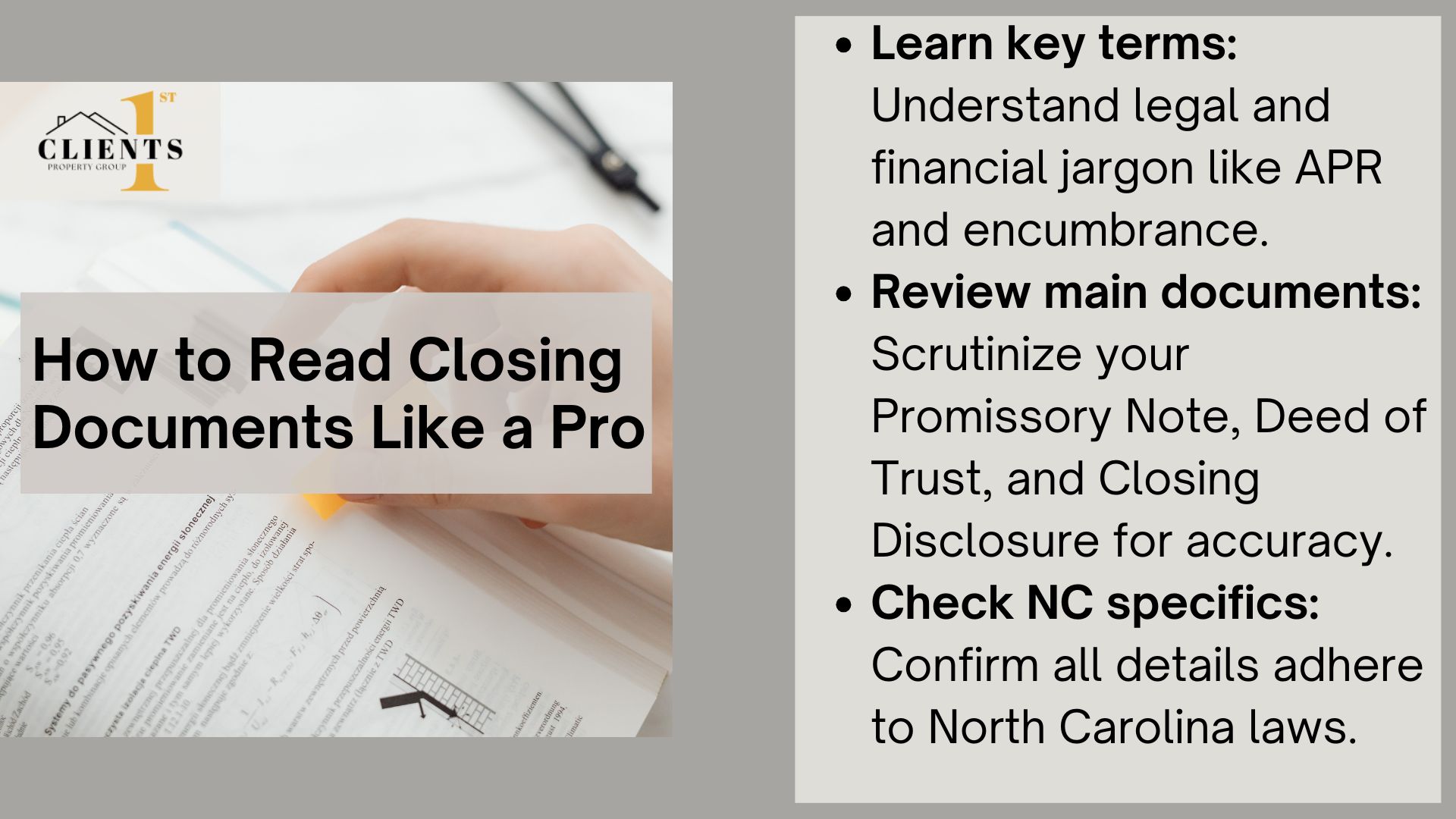
Understanding your closing documents can make a big difference. We help Charlotte homebuyers learn to decode legal terms and grasp document structure. This way, you can spot important details and follow North Carolina laws.
Key Terminology Every Buyer Should Know
Legal and financial terms are key to your responsibilities. Let’s break down the most important phrases:
Legal Terms Defined by North Carolina Bar Association
North Carolina has its own language for property deals. “Consideration” means the agreed-upon price, and “encumbrance” refers to claims on the property like liens. The NC Bar Association also defines “quiet enjoyment,” which is your right to live in the home without issues.
Financial Terms From CFPB Guidelines
The Consumer Financial Protection Bureau makes sure lending terms are clear. Important terms include:
- APR (Annual Percentage Rate): This is the total cost of borrowing, including fees.
- Prepayment Penalty: Fees for paying off the loan early (rare in NC mortgages).
- Escrow Analysis: An annual check on tax and insurance payments.
Essential Sections in Every Closing Package
Charlotte closing packets have three main documents to review:
Promissory Note Structure
This contract outlines how you’ll repay the loan. Check the principal amount, interest rate, and payment schedule. North Carolina law requires clear late fee policies.
Deed of Trust Requirements
North Carolina uses deeds of trust instead of mortgages. This document gives the lender a security interest and explains foreclosure steps. Make sure the property description is correct and the “power of sale” clause follows NC laws.
Closing Disclosure Breakdown
The CFPB-mandated form lists all costs of the transaction. Compare it to your Loan Estimate – big differences need legal review. Look closely at:
- Origination fees
- Transfer taxes
- Prepaid interest calculations
Charlotte-Specific Legal Requirements
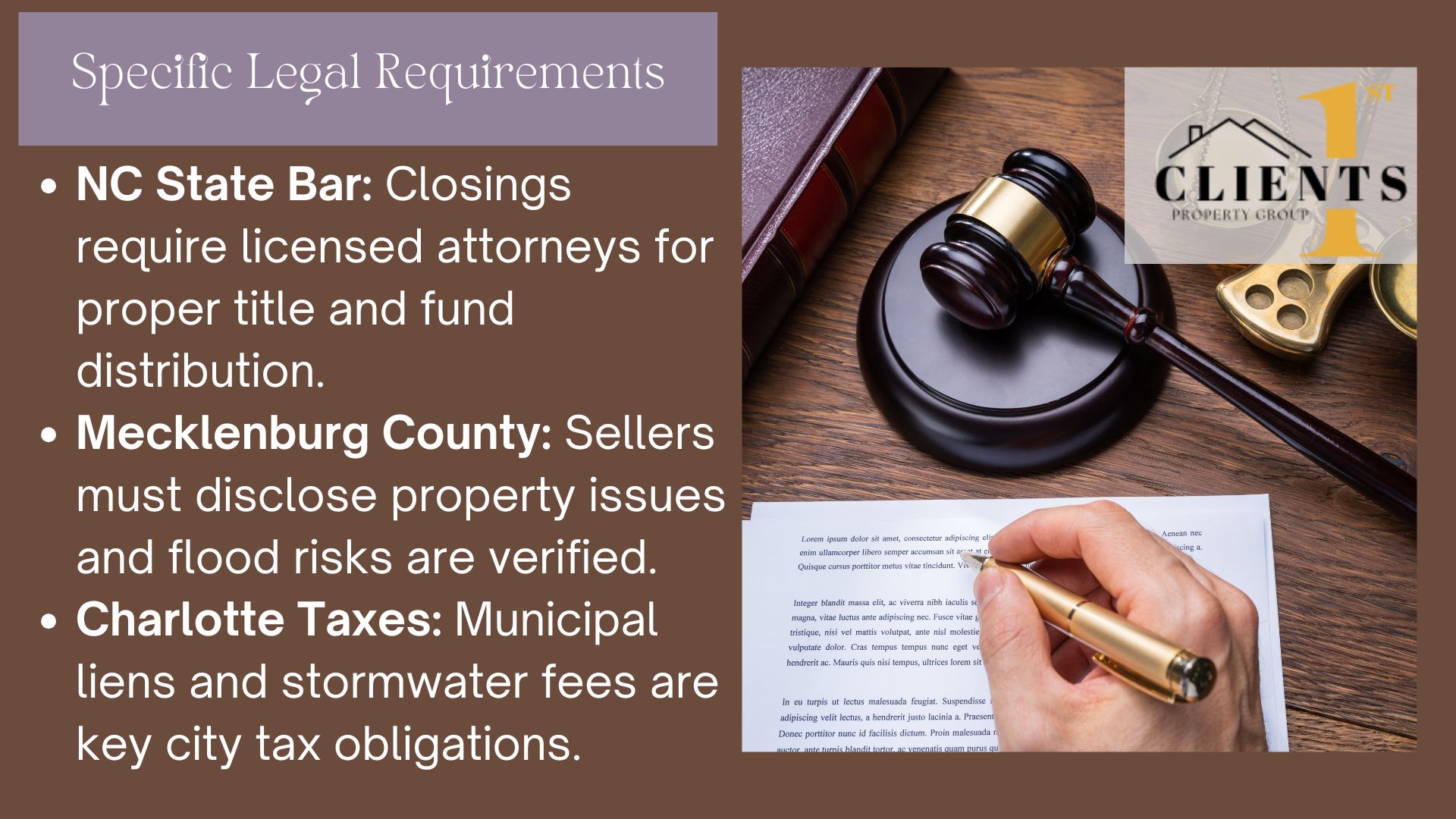
Understanding Charlotte’s real estate closing process is key. It involves knowing local laws that protect buyers and clarify their duties. We’ll look at three main areas: state bar rules, county addendums, and tax disclosures.
North Carolina State Bar Mandates
Attorney Review Process Under NCGS § 47-17.1
In North Carolina, licensed attorneys must handle residential real estate closings. This law makes sure contracts are right and followed. Attorneys check:
- Clear property title ownership
- Accurate loan documents
- Right distribution of funds
Mecklenburg County Addendums
Local Property Disclosure Forms
Sellers must fill out forms about known property problems. These forms cover:
- Structural repairs
- Water intrusion history
- Boundary disputes
Flood Zone Verification Process
We use Mecklenburg County’s GIS mapping to check flood risks. This includes:
- Official FEMA floodplain checks
- Topographical surveys
- Drainage system analysis
Charlotte City Tax Obligations
Municipal Lien Certificates
These documents show if there are unpaid city taxes or code issues. We get them 10 days before closing to:
- Find hidden debts
- Stop future claims
- Ensure a smooth transfer
Stormwater Fee Disclosures
Charlotte Water bases fees on surfaces like driveways. Buyers get:
- The current fee schedule
- Property-specific assessment
- When to pay
Step-by-Step Document Review Process
Mastering your closing document review is key in Charlotte’s real estate world. We’ve created a method to help buyers understand paperwork easily. This way, they can navigate through legal documents without feeling overwhelmed.
Pre-Closing Preparation Checklist
Begin your review with these Charlotte-specific tips:
- Gather 3 months of bank statements, tax returns, and pay stubs
- Compare your original Good Faith Estimate to final loan disclosures
- Confirm Mecklenburg County recording fees match NC statutory rates
- Schedule attorney review at least 72 hours before closing
Line-by-Line Analysis Techniques
Follow this numbered process when examining your documents:
- Verify loan terms match your locked-in rate and product type
- Check fee allocations against Charlotte title insurance benchmarks
- Confirm no duplicate charges for courier or notary services
- Validate prorated property taxes align with Mecklenburg County’s calendar
Red Flag Identification Strategies
Common discrepancies in Charlotte transactions
- Unexpected “assignment fees” from non-local lenders
- Incorrect seller credit calculations for repair allowances
- Mismatched signatures on NC-required disclosure forms
Expiration dates for contingencies
Circle these critical deadlines in red:
- Due diligence period end date (typically 30-60 days in NC)
- Loan commitment expiration from your mortgage provider
- Rate lock deadline to avoid extension fees
Frequently Overlooked Details in Charlotte Closings
Homebuyers in Charlotte often overlook important details while focusing on big costs and loan terms. Our team finds three key areas that need extra attention during document reviews.
Special Assessment Disclosures
North Carolina law demands full disclosure of neighborhood charges. Yet, many buyers ignore these sections. Charlotte’s fast growth brings unique challenges:
Neighborhood improvement districts
- Check for pending sidewalk assessments under NCDOT guidelines
- Review streetlight maintenance fees in annexation areas
- Verify drainage project costs in flood-prone zones
Homeowners Association Documents
More than 40% of Charlotte homes are under HOAs with strict state rules. Important points include:
NC Planned Community Act requirements
- Confirm voting rights documentation matches state statutes
- Validate architectural review process timelines
- Check reserve fund disclosures for major repairs
Utility Transfer Confirmations
Duke Energy covers 90% of Mecklenburg County, making transfers critical. Follow this guide:
Duke Energy account procedures
- Submit meter readings within 24 hours of closing
- Request written confirmation of service transfer dates
- Verify stormwater fee calculations for your property
These details are often hidden in closing packages but have big financial effects. We suggest marking these sections first when reviewing closing paperwork.
When to Consult Our Charlotte Real Estate Experts
When dealing with complex legal needs or unexpected problems, it’s time to seek help. Many buyers try to understand documents on their own. But, some situations really need a pro’s eye to keep your investment safe.
Reach out to Clients 1st Property Group right away if you face:
- Title discrepancies – Missing signatures, wrong property lines, or unpaid liens
- Restrictive HOA covenants – Rules on building, renting, or special fees
- NCGS-mandated attorney reviews – North Carolina law says you need a lawyer for closings
Our team works with real estate lawyers to fix issues before the big day. We check every detail, from taxes to fees, to make sure everything follows Charlotte’s rules.
Don’t miss important details in your closing package. Call (704) 622-4865 for a free check. Our experts will explain legal terms and make sure all numbers add up right.
Final Steps: Ensuring Clear Charlotte Closing Documents
Mastering closing documents is key for successful real estate deals in Charlotte. Our study found that buyers who carefully check their papers have 34% fewer issues after buying. Charlotte’s tax rules and North Carolina State Bar needs require careful focus.
Clients 1st Property Group makes sure every deal is clear. We help buyers understand HOA agreements, special assessments, and utility transfers in Charlotte areas. Our team checks every detail against Mecklenburg County laws to avoid mistakes.
Reviewing documents early builds trust in a big financial choice. Let our Charlotte experts make your closing smooth with their 1,200+ local deals experience. Contact us today to make complex paperwork easy for your home buying journey.